







What's Happening?
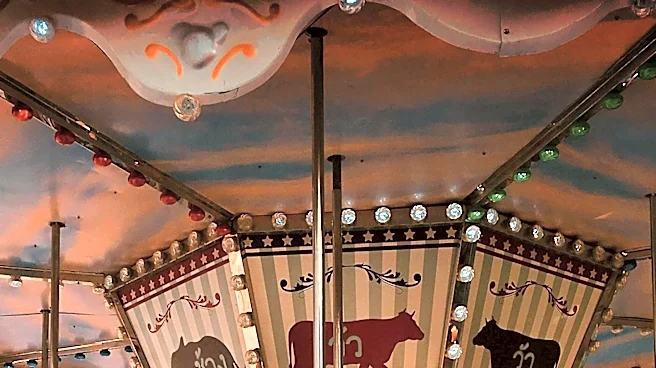
The Tennessee Fox Trot Carousel, a whimsical creation by artist Red Grooms, may soon see a revival after being in storage for over two decades. Originally located on the riverfront in Nashville, the carousel featured 36 unique figures representing Tennessee's
cultural icons. Despite its initial popularity, financial challenges led to its disassembly and storage at the Tennessee State Museum. Recently, the museum has expressed interest in partnering with private entities to restore and operate the carousel, reflecting its enduring appeal and cultural significance. The museum's executive director, Ashley Howell, acknowledges the public's continued interest and the potential for the carousel to become a beloved attraction once again.
Why It's Important?
The potential revival of the Tennessee Fox Trot Carousel highlights the importance of preserving cultural heritage and public art. The carousel, with its unique artistic and historical value, represents a significant part of Tennessee's cultural identity. Its restoration could enhance Nashville's cultural landscape, attracting tourists and locals alike. The project also underscores the challenges of funding and maintaining public art, as well as the role of public-private partnerships in preserving cultural assets. The carousel's return could serve as a catalyst for further cultural and artistic initiatives in the region, promoting community engagement and cultural tourism.
What's Next?
The Tennessee State Museum is actively seeking partners to assist in the restoration and operation of the carousel. This initiative may involve fundraising efforts and collaborations with local businesses and cultural organizations. The museum's plans to reintroduce the carousel could lead to discussions about its location, maintenance, and integration into Nashville's cultural offerings. As momentum builds, the community's involvement and support will be crucial in bringing the carousel back to life. The project's success could inspire similar efforts to preserve and promote other cultural landmarks in Tennessee and beyond.