





What's Happening?
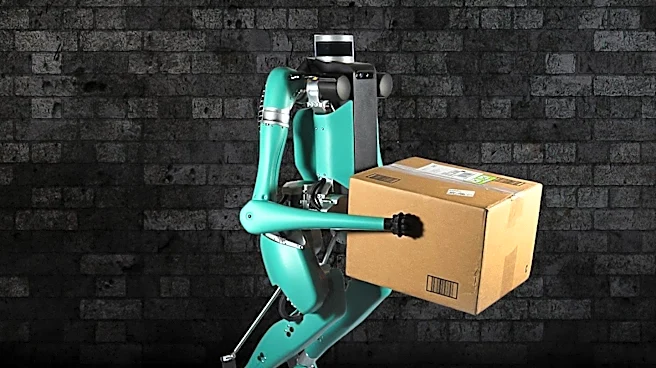
Avride, a U.S.-based autonomous vehicle startup headquartered in Austin, TX, is preparing to launch a fleet of autonomous delivery robots at the University of North Carolina at Charlotte. To support this deployment, the company is seeking a full-time
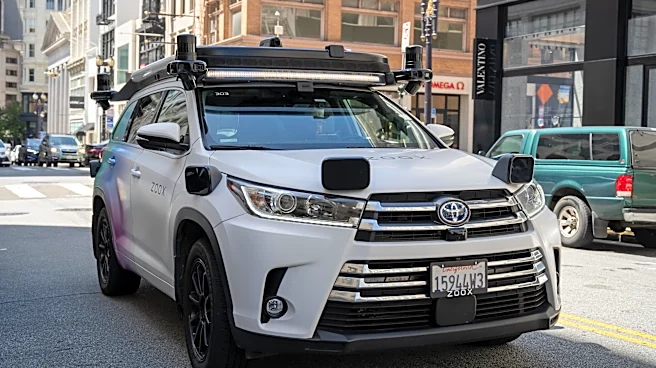
Robot Service Technician. This role will involve the assembly, maintenance, troubleshooting, repair, and field operation of these autonomous delivery robots. The technician will be responsible for tasks such as assembling wiring harnesses, installing and configuring sensors like LiDAR and cameras, performing mechanical and electrical assembly, and conducting routine maintenance and repairs. The position requires experience with mechanical and electrical tools, the ability to interpret technical documentation, and an understanding of AC/DC electrical systems. Avride currently operates a fleet of autonomous vehicles in Dallas, Texas, in partnership with Uber, and develops both autonomous cars and delivery robots that share technologies.
Why It's Important?
The deployment of Avride's autonomous delivery robots at the University of North Carolina at Charlotte signifies a growing trend in the U.S. towards integrating robotics into last-mile logistics and campus services. This initiative could serve as a model for other universities and urban environments looking to enhance efficiency, reduce delivery costs, and provide innovative services. For the U.S. technology and robotics industries, this represents a tangible step in the commercialization and widespread adoption of autonomous systems, creating demand for skilled technicians and engineers. The partnership with Uber in Dallas also highlights the potential for collaboration between autonomous vehicle developers and established service providers, accelerating market penetration. This development could lead to job creation in specialized technical fields and contribute to the economic growth of regions embracing robotic solutions. Furthermore, the data and operational insights gained from such deployments will be crucial for refining autonomous technologies and addressing regulatory and public acceptance challenges.
What's Next?
Avride's immediate next step is to successfully recruit and onboard a Robot Service Technician to ensure the smooth deployment and operation of its autonomous delivery robot fleet at the University of North Carolina at Charlotte. Following this, the company will focus on the operational launch and ongoing maintenance of the fleet, gathering data on performance, efficiency, and user satisfaction. The insights gained from this deployment will likely inform future expansions to other campuses or urban areas. Avride may also continue to refine its robot designs and software based on real-world operational feedback. The success of this project could attract further investment and partnerships, potentially leading to broader adoption of Avride's technology across the U.S. The company's dual focus on autonomous cars and delivery robots suggests a long-term strategy of leveraging shared technological advancements across different autonomous vehicle applications.
Beyond the Headlines
The increasing presence of autonomous delivery robots, as exemplified by Avride's deployment, raises several deeper implications for U.S. society and infrastructure. Ethically, the widespread use of robots in public spaces will necessitate discussions around safety protocols, liability in case of accidents, and the impact on human employment in delivery sectors. Legally, cities and states will need to develop clear regulations for autonomous ground vehicles, addressing issues like right-of-way, speed limits, and operational zones. Culturally, the sight of robots performing everyday tasks could gradually normalize human-robot interaction, potentially influencing public perception and acceptance of more advanced AI and automation. The deployment also highlights the evolving nature of urban planning, as cities may need to adapt infrastructure to accommodate autonomous delivery systems. This shift could also contribute to a more sustainable logistics model by reducing reliance on traditional, fossil-fuel-powered delivery vehicles, aligning with broader environmental goals.