


What's Happening?
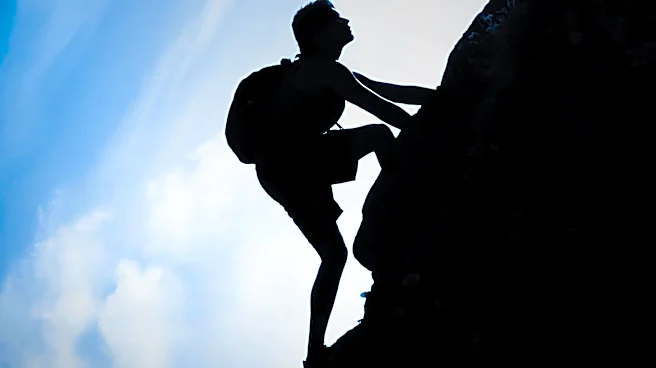
Rock climbing is experiencing a significant surge in popularity, driven by social media trends, high-profile free-solo ascents by climbers like Alex Honnold, and its upcoming inclusion in the LA28 Olympic Games. This increased interest has led to an influx
of new members at local climbing gyms, with employees noting a continuous rise in participation since 2019. The sport's growing presence in pop culture, including its influence on fashion trends like 'Gorpcore,' has broadened its appeal beyond traditional enthusiasts. However, this rapid growth has also sparked concerns among some within the climbing community, who worry about the potential over-exploitation of both indoor gyms and natural climbing sites like Joshua Tree and Yosemite, fearing that new participants may be drawn more by the aesthetic than the sport itself.
Why It's Important?
The escalating popularity of rock climbing has significant implications for the U.S. outdoor recreation industry and environmental conservation efforts. While increased participation can boost local economies and promote healthier lifestyles, it also places immense pressure on natural resources and infrastructure. The potential for overcrowding and environmental degradation at iconic climbing destinations like Yosemite and Joshua Tree could necessitate stricter regulations and increased funding for conservation and maintenance. For indoor climbing gyms, the surge in membership presents both opportunities for growth and challenges in managing capacity and maintaining a welcoming atmosphere. The debate within the climbing community highlights a common tension between expanding access to a sport and preserving its core values and environmental integrity.
What's Next?
With rock climbing set to be a featured sport in the LA28 Olympic Games, its visibility and popularity are expected to continue to grow. The events, including lead climbing, speed climbing, and bouldering, will be held at the Long Beach Climbing Theater, a temporary outdoor venue. This Olympic spotlight will likely attract even more newcomers to the sport, intensifying the need for sustainable management practices at both indoor and outdoor climbing locations. Discussions around balancing accessibility with preservation will become more critical, potentially leading to new policies or community-led initiatives aimed at educating climbers on responsible practices and protecting natural environments.
Beyond the Headlines
The rise of rock climbing into mainstream culture reflects broader shifts in how Americans engage with fitness and outdoor activities. The 'Gorpcore' fashion trend, for instance, illustrates how outdoor pursuits are influencing urban aesthetics, blurring the lines between sport and lifestyle. This commercialization, while bringing new audiences, also raises questions about authenticity and the potential dilution of a sport's original ethos. The tension between 'climbing for sport' versus 'climbing for the look of it' points to a cultural phenomenon where activities gain social currency through media representation. This trend could lead to a redefinition of what it means to be an 'athlete' or an 'outdoor enthusiast,' potentially fostering a more diverse but also more commodified landscape of physical activity.