

What's Happening?
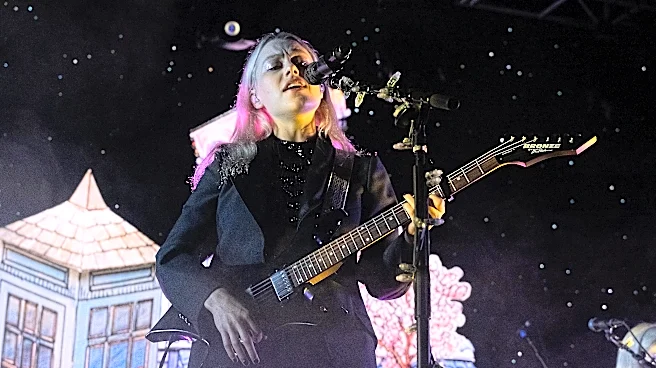
American singer-songwriter Phoebe Bridgers has implemented a strict no-phone policy for her 'Lost Tour' concerts, leading to an unexpected surge in fan-created illustrations, paintings, and sketches shared across social media. Concertgoers are required
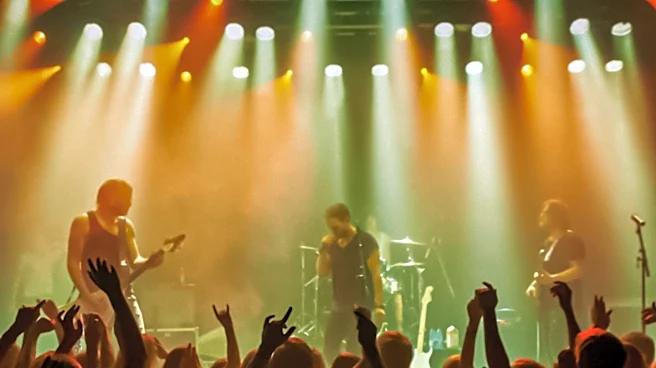
to secure their smartphones in sealed pouches before entering venues, preventing them from filming or sharing live footage. This policy, initially tested at a small trial show at Union Chapel, has prompted fans to capture their concert experiences through art, often from memory, after leaving the venues. These artworks, depicting atmospheric moments and stage visuals like striking blue light rays and intimate acoustic staging, have gained significant traction online, with some artists receiving recognition from Bridgers' official 'Lost Tour' Instagram account.
Why It's Important?
This development highlights a growing trend in the live music industry where artists are seeking to enhance the concert experience by minimizing digital distractions. By banning phones, Bridgers aims to foster a more present and engaged audience, encouraging genuine human connection and creativity. The resulting fan art movement not only provides a unique form of audience participation but also creates a distinct and authentic record of the tour, contrasting with the ubiquitous smartphone footage that often dominates online concert content. This approach could influence other touring musicians to adopt similar phone-free policies, potentially reshaping how live performances are experienced and documented in the digital age. It also underscores the power of artistic expression as an alternative to digital capture, fostering a sense of community among fans who share their creative interpretations.
What's Next?
Phoebe Bridgers is scheduled to continue her 'Lost Tour' with upcoming dates in the United Kingdom, including Manchester, Glasgow, Birmingham, and London. The anticipation for these British dates is reportedly high, partly due to the phone-free rule, which ensures that the concert experience remains fresh and unspoiled for international audiences who haven't seen endless smartphone footage from the U.S. leg. The success of this policy and the fan art it has generated may encourage more artists to experiment with similar phone-free environments, potentially leading to a broader shift in concert etiquette and audience engagement across the music industry. Fans who rarely draw are also being encouraged to pick up pencils after shows, suggesting a potential for new forms of fan interaction and artistic output.
Beyond the Headlines
The no-phone policy implemented by Phoebe Bridgers touches upon deeper implications regarding the nature of live experiences in an increasingly digital world. It challenges the modern impulse to document every moment through a screen, instead promoting a more immersive and personal engagement with the performance. This shift could lead to a re-evaluation of what constitutes a 'memorable' experience, moving away from digital archives towards personal recollection and creative interpretation. Ethically, it raises questions about the balance between personal freedom to record and the collective experience of a live event. Culturally, it fosters a unique form of fan culture where artistic skill and memory become central to sharing and reliving concert moments, potentially inspiring a resurgence in traditional art forms as a response to digital saturation.