





What's Happening?
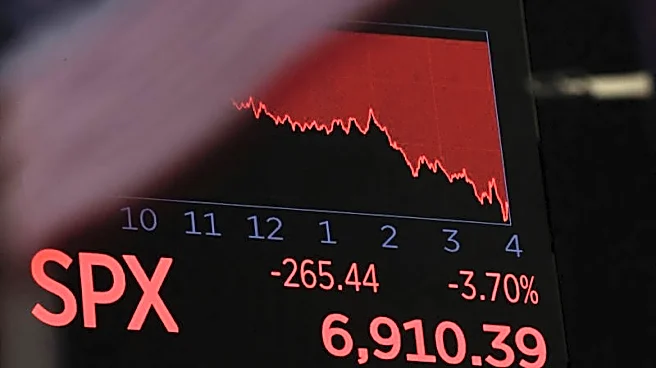
GoodRx Holdings Inc. (GDRX) stock experienced an 8.7% drop in premarket trading on Wednesday, November 25, 2026, reaching $2.74 from its previous close of $3.00. This decline occurred as the broader market also slid, with the S&P 500 down 2.0% at the same
time. The fall for GoodRx followed its Q3 2026 report, which indicated strong revenue growth and raised full-year guidance, including a 93% surge in Pharma Direct. However, the market's reaction was largely attributed to a broader economic concern: a Core PCE reading of 3.3%, which was slightly higher than anticipated. This reading, as reported by Seeking Alpha, has led to expectations of another Federal Reserve rate hike, according to the New York Times, contributing to the overall market downturn. GoodRx operates a digital healthcare platform in the U.S., assisting consumers in comparing and reducing prescription drug costs through price comparison services and discount codes accepted at most U.S. pharmacies.
Why It's Important?
The premarket stock decline for GoodRx, despite a positive Q3 earnings report, highlights the significant influence of macroeconomic factors on individual company valuations, even for those demonstrating strong operational performance. The broader market slide, triggered by a higher-than-expected Core PCE reading, signals persistent inflationary pressures within the U.S. economy. This situation increases the likelihood of further interest rate hikes by the Federal Reserve, which can impact borrowing costs for businesses and consumers, potentially slowing economic growth. For GoodRx, a company focused on healthcare cost reduction, a tightening economic environment could paradoxically increase demand for its services as consumers seek ways to save money on prescriptions. However, investor sentiment, as reflected in the stock drop, appears to prioritize the broader economic outlook and potential market volatility over company-specific successes in such conditions. This event underscores the interconnectedness of corporate performance and the wider economic landscape.
What's Next?
The market will closely monitor upcoming economic indicators, particularly future Core PCE readings and statements from the Federal Reserve, to gauge the likelihood and timing of further interest rate adjustments. For GoodRx, while its Q3 performance was strong, concerns about 2027 growth and a restatement mentioned in its earnings call may warrant further scrutiny from investors. The company's ability to sustain its growth trajectory, especially in its Pharma Direct segment, will be crucial. The broader market's reaction to potential Federal Reserve actions will also continue to influence GoodRx's stock performance. Investors will be looking for signs of economic stabilization or a clearer path for inflation to recede, which could alleviate pressure on the market and allow company-specific fundamentals to drive stock valuations more prominently. GoodRx's strategy for navigating a potentially higher interest rate environment and its impact on consumer spending habits will be key.
Beyond the Headlines
The situation with GoodRx reflects a broader trend where digital healthcare platforms are becoming increasingly vital for consumers managing rising healthcare costs. GoodRx's model, which helps users find lower prescription prices, addresses a critical need in the U.S. healthcare system, where drug costs can be a significant burden. The fact that its services often result in lower prices than insurance or Medicare copays, especially for high-deductible plans, points to systemic issues within healthcare pricing and insurance structures. This market dynamic suggests a growing reliance on third-party solutions to navigate complex and often opaque pricing. The stock's reaction, despite strong earnings, also highlights the ongoing tension between company-specific innovation and the overarching influence of macroeconomic policy decisions, particularly those related to inflation and interest rates. This interplay can create volatility even for companies providing essential services, underscoring the challenges of investing in a dynamic economic climate.