





What's Happening?
The U.S. Army Corps of Engineers has granted a federal permit for the construction of the Louisiana International Terminal (LIT), a significant development by the Port of New Orleans (Port NOLA). This $1.8-billion greenfield terminal is projected to have
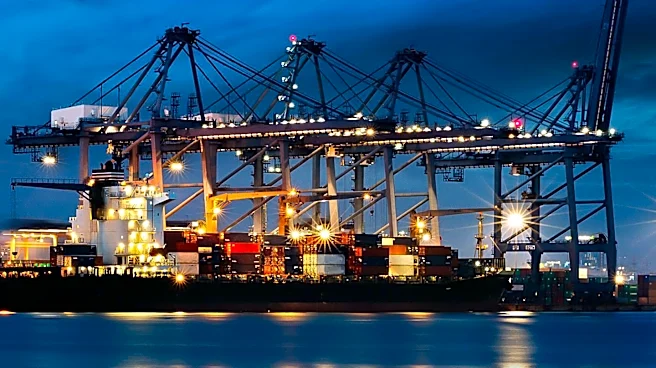
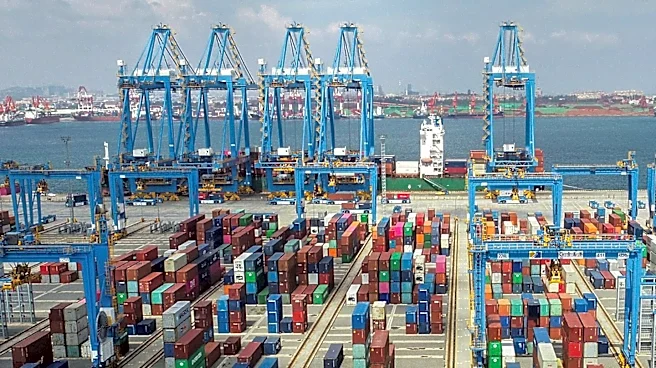
an annual capacity of 2 million container units upon full build-out. The project is a collaborative effort with Terminal Investment Limited, the terminal-operating arm of Mediterranean Shipping Co., and Ports America, who are collectively investing over $800 million. Additionally, the terminal has secured $300 million in federal grants. The LIT is designed as a deepwater container facility with multimodal connections to interstate highways and the nation’s Class I rail network. Its strategic location downriver aims to address existing constraints on container operations in New Orleans, particularly the inability of ultra-large container vessels (over 16,000 TEUs) to pass beneath the Crescent City Connection bridge.
Why It's Important?
This new port development is crucial for enhancing U.S. import and export supply chains and strengthening Louisiana's role in national trade. By accommodating larger vessels and increasing container capacity, the LIT will improve efficiency and reduce shipping costs for businesses across more than 30 states. This expansion is particularly vital given the growing demand for containerized cargo and the need for modern infrastructure to handle increasingly larger ships. The project's multimodal connections will facilitate faster and more reliable movement of goods, benefiting industries reliant on efficient logistics. For the U.S. economy, this investment in port infrastructure can alleviate bottlenecks, support job creation, and bolster competitiveness in global trade. It also represents a strategic move to modernize and expand the nation's port capabilities, ensuring resilience and capacity for future economic growth.
What's Next?
The Port NOLA is targeting an opening for the Louisiana International Terminal in 2028, with an initial annual capacity ranging from 180,000 to 280,000 TEUs. The full build-out, reaching 2 million container units annually, is expected to be completed over a 25-year period. The project plans include two berths capable of accommodating two 16,000-container vessels, with a water depth of 55 feet, making it one of the deepest U.S. ports. The focus will now shift to the construction phase, involving significant engineering and logistical efforts. The successful development and operation of the LIT will likely serve as a model for other U.S. ports looking to expand their capacity and accommodate larger vessels, further driving investment in port infrastructure nationwide. The project's progress will be closely watched by stakeholders in the shipping, logistics, and manufacturing sectors.
Beyond the Headlines
The approval of the Louisiana International Terminal signifies a broader trend in U.S. infrastructure development: a strategic pivot towards enhancing maritime logistics to support economic growth and global trade competitiveness. This project is not just about increasing capacity; it's about future-proofing the nation's supply chain against disruptions and evolving shipping demands. The emphasis on deepwater access and multimodal connections reflects a comprehensive approach to logistics, integrating sea, rail, and road networks. This could lead to a re-evaluation of existing port infrastructure across the U.S., potentially spurring further investments in modernization and expansion. Moreover, the collaboration between public entities and private international shipping and terminal operators highlights a growing model for financing and executing large-scale infrastructure projects, leveraging private sector expertise and capital to achieve national economic objectives. The long-term impact could include a shift in trade patterns and increased economic activity in regions connected to the new terminal.