



What's Happening?
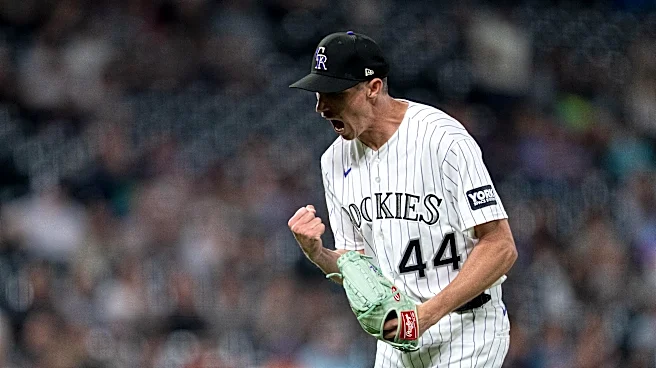
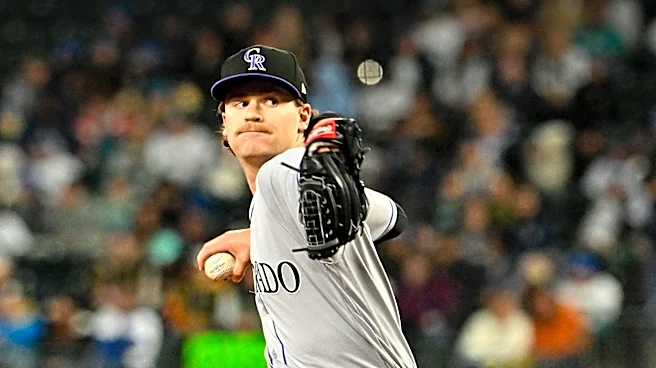
The Colorado Rockies are confronting significant pitching challenges, as evidenced by their staff finishing last in ERA (5.59) and strikeouts (1113) in the previous season. Despite efforts to bolster their rotation by adding free-agent starting pitchers
like Tomoyuki Sugano, Michael Lorenzen, and Jose Quintana last winter, these acquisitions yielded mixed results. Sugano, for instance, allowed 33 home runs and maintained an ERA well above 5.00, though he demonstrated a low walk rate. Quintana missed a substantial portion of the year due to injury, while Lorenzen, despite suppressing well-hit contact, gave up numerous hits. The team's previous competitive periods were marked by reliable pitching, highlighting the current deficit. The front office acknowledges the ongoing need for pitching improvements, with a strategic shift towards developing internal talent.
Why It's Important?
The Rockies' persistent pitching struggles have significant implications for their competitiveness and fan engagement. A strong pitching staff is fundamental to success in Major League Baseball, and the team's current performance in this area places them at a disadvantage. The reliance on free-agent pitchers who delivered inconsistent results underscores the difficulty of attracting top-tier talent to a team with a challenging home-field environment for pitchers. This situation affects not only the team's on-field performance but also its financial viability through ticket sales and merchandise. A sustained period of poor performance due to pitching deficiencies could lead to decreased fan interest and revenue, impacting the broader sports economy in Denver. The shift towards internal development suggests a long-term strategy to build a sustainable competitive advantage, but it also implies a potentially extended period before significant improvements are seen.
What's Next?
Looking ahead to the 2026-27 offseason, the Rockies are expected to continue prioritizing pitching. While adding another short-term starter remains a consideration, the organization's long-term view emphasizes the development of prospects such as Chase Dollander, Sean Sullivan, and Jackson Cox. This internal focus aims to address the longstanding pitching problem from within, suggesting a commitment to nurturing talent through their farm system. The success of this strategy will be crucial for the team's future competitiveness and its ability to contend for playoff spots. The performance of these young hurlers will dictate the pace of the team's rebuild and its return to prominence in Major League Baseball.
Beyond the Headlines
The Rockies' strategic pivot towards internal pitching development reflects a broader trend in professional sports where sustainable success often hinges on a robust player development system rather than solely relying on expensive free-agent acquisitions. This approach, while potentially slower to yield immediate results, can foster a more cohesive team culture and provide cost-effective talent. However, it also places immense pressure on the scouting and player development departments to identify and cultivate future stars. The unique challenges of pitching at Coors Field, known for its high altitude and hitter-friendly environment, add another layer of complexity to the Rockies' pitching strategy, making internal development even more critical for players who can adapt to these conditions. The long-term success of this strategy could serve as a model for other teams facing similar environmental or market challenges.