



What's Happening?
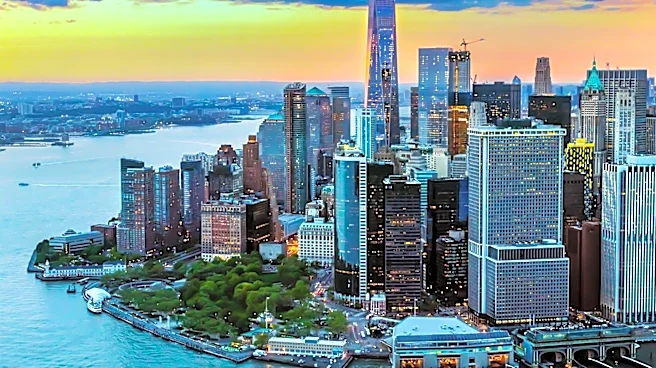
Bushburg Properties has acquired the 55-story, 1.7 million square foot office tower at 60 Wall Street in Lower Manhattan for $400 million, with plans to convert it into residential units. This acquisition marks a significant discount from its 2017 valuation
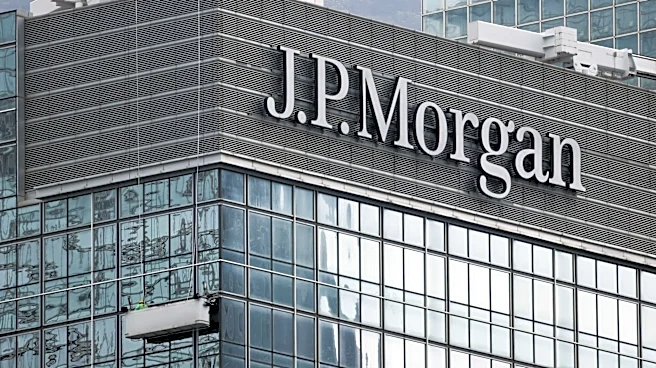
of over $1 billion. The building, which previously housed J.P. Morgan and Deutsche Bank, is set to undergo the largest office-to-residential conversion in New York and the nation, potentially yielding approximately 1,920 new dwellings. This project would surpass the current record holder, 25 Water Street, by about 600 units. Bushburg Properties specializes in such conversions and currently has two other projects underway in Lower Manhattan at 100 William Street and 80 Pine Street. The conversion of 60 Wall Street is expected to bring nearly 4,000 new residents to the area, based on average household sizes.
Why It's Important?
This conversion is a significant development for Lower Manhattan's real estate landscape, addressing the growing demand for residential units while repurposing underutilized office spaces. The influx of nearly 4,000 new residents could stimulate local businesses and services, contributing to the area's economic vitality. However, the project's reliance on the City’s 467-m program, which offers tax abatements in exchange for setting aside 25% of units as affordable, has drawn criticism. Former City Comptroller Brad Lander's 2025 analysis suggested the program might be overly generous to developers, with an estimated 'opportunity cost' of $3.8 billion in waived property taxes for Lower Manhattan alone. This raises questions about the long-term financial implications for the city and whether the public benefits adequately offset the tax revenue foregone.
What's Next?
The conversion of 60 Wall Street is expected to proceed, contributing to the ongoing transformation of Lower Manhattan into a more residential area. The Downtown Alliance reported that over 7,500 units in 32 buildings are currently under construction or planned for development in Lower Manhattan, primarily through office-to-residential conversions. This trend is likely to continue, with several other major office buildings slated for similar transformations, including 61 Broadway, 80 Broad Street, and 111 Wall Street. The debate surrounding the 467-m program's generosity and its impact on city finances is also likely to persist, potentially leading to future policy discussions or adjustments regarding tax incentives for such developments.
Beyond the Headlines
The large-scale conversion of 60 Wall Street highlights a broader shift in urban planning and real estate utilization, particularly in post-pandemic environments where traditional office demand has changed. This trend could redefine the character of business districts, transforming them into mixed-use neighborhoods with a greater residential presence. The ethical implications of public subsidies for private development, especially when the 'opportunity cost' in waived taxes is substantial, will remain a critical point of discussion. Balancing the need for affordable housing and urban revitalization with fiscal responsibility and equitable distribution of benefits will be a continuous challenge for city planners and policymakers. The architectural preservation efforts for 60 Wall Street, though ultimately unsuccessful in securing landmark status, also underscore the tension between development and historical conservation.