
What's Happening?
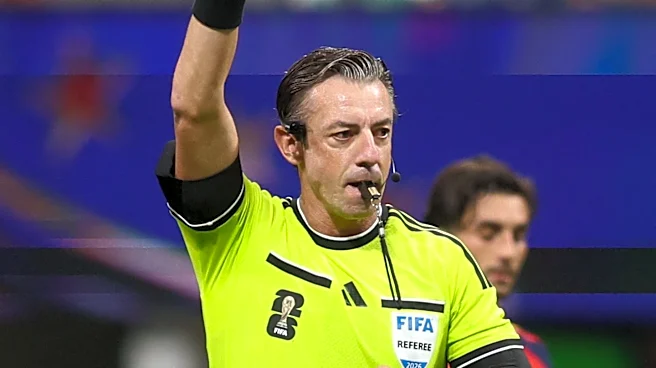
The offside rule in soccer, a fundamental yet often misunderstood aspect of the game, has been a focal point during the World Cup 2026. Recent matches have seen several goals disallowed due to offside violations,
including a controversial call in the United States' match against Bosnia and Herzegovina. The rule requires that two opposing players be between the attacking player and the goal when the ball is played forward. Exceptions include set pieces like throw-ins and corner kicks. The use of semi-automated technology for offside reviews has been instrumental in ensuring accurate calls, although it sometimes leads to delays in flagging infractions.
Why It's Important?
The offside rule is crucial for maintaining fairness and competitive balance in soccer. Its enforcement can significantly impact match outcomes, as seen in the World Cup. The use of technology to review offside calls represents a broader trend in sports towards integrating technology to enhance officiating accuracy. This development is particularly important in high-stakes tournaments like the World Cup, where the stakes are high for teams and fans alike. The rule's application and the technology supporting it are essential for preserving the integrity of the game and ensuring that results are determined by skill rather than officiating errors.
What's Next?
As the World Cup progresses, the offside rule will continue to be a critical aspect of match officiating. The ongoing use of technology to review calls may lead to further refinements in the system, potentially influencing how other sports integrate technology into officiating. The experiences from this World Cup could inform future rule adjustments and technological innovations, aiming to improve the speed and accuracy of decisions. Stakeholders, including teams, officials, and governing bodies, will likely engage in discussions post-tournament to evaluate the effectiveness of current practices and explore enhancements.