
What's Happening?
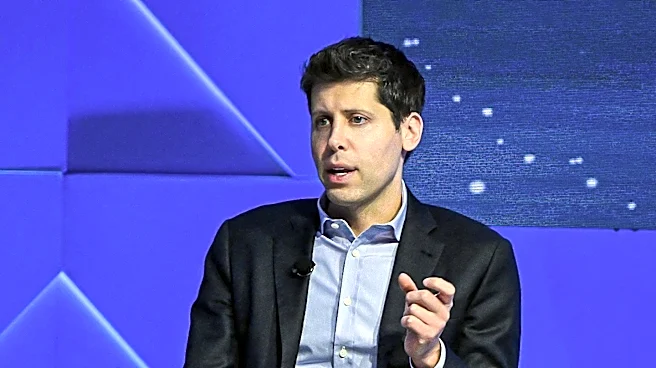
Sam Altman, CEO of OpenAI, has publicly stated that the artificial intelligence industry has failed to effectively communicate the benefits of AI to ordinary people. According to Altman, the industry has focused
too heavily on discussing risks and potential cures for diseases like cancer, rather than demonstrating how AI can empower individuals and foster creativity and entrepreneurship. In response to this perceived communication gap, OpenAI has launched a new initiative. This program involves paid local experts who will assist small businesses, such as bakeries, in 20 U.S. cities. The goal of this program is to provide tangible examples of how AI can be applied to everyday business operations and directly benefit local communities, thereby making the technology more accessible and understandable to the general public.
Why It's Important?
Altman's critique highlights a significant challenge for the rapidly evolving AI sector: public perception and understanding. If the industry cannot effectively convey the practical advantages of AI, it risks alienating a large segment of the population and potentially facing increased skepticism or regulatory hurdles. The launch of OpenAI's local expert program is a strategic move to address this issue. By focusing on small businesses and local economies, OpenAI aims to demonstrate the immediate and tangible value of AI, which could foster greater public acceptance and adoption of AI technologies. This approach could also set a precedent for how other AI companies engage with communities, shifting the narrative from abstract technological advancements to concrete, beneficial applications. The success of this program could influence future AI development and deployment strategies across the U.S., particularly in how AI is integrated into local economies and small business operations.
What's Next?
The rollout of OpenAI's local expert program in 20 U.S. cities will serve as a crucial test case for its effectiveness in bridging the communication gap between the AI industry and the public. The company will likely monitor the program's impact on participating small businesses and gather feedback from both the experts and the businesses they assist. If successful, this initiative could be expanded to more cities or inspire similar programs from other AI developers. The broader AI industry may also take cues from OpenAI's strategy, potentially leading to a shift in how AI companies market and explain their technologies. This could result in more emphasis on practical, localized applications rather than abstract, high-level discussions, ultimately shaping public discourse and policy around AI in the coming months and years.
Beyond the Headlines
Altman's comments and OpenAI's new program touch upon a deeper societal implication: the democratization of advanced technology. Historically, cutting-edge technologies have often been perceived as exclusive to large corporations or specialized fields. By focusing on local businesses and everyday applications, OpenAI is attempting to decentralize the benefits of AI, making it a tool for broader economic empowerment. This initiative could also spark discussions about digital literacy and the need for accessible education on AI for the general public. Furthermore, it raises questions about the ethical responsibility of AI developers to ensure their technologies are not only powerful but also understandable and beneficial to all segments of society, potentially influencing future regulatory frameworks and corporate social responsibility initiatives within the tech industry.