







What's Happening?
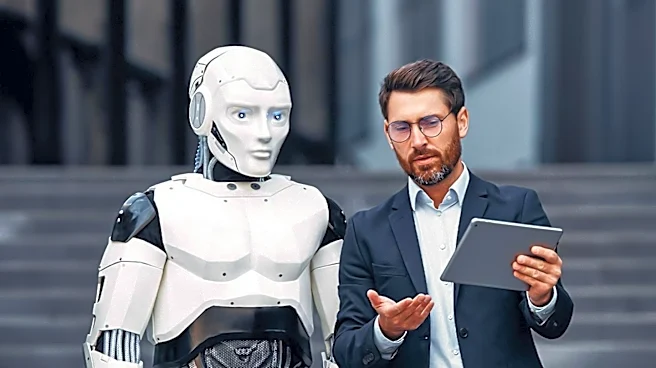
AI chatbots are increasingly being used to conduct early-stage job interviews for white-collar positions. Companies like Experis, Coinbase, and Zapier have adopted this technology to manage the high volume of job applications they receive. The AI chatbots,
such as Experis' Sophie and Coinbase's Milo, conduct interviews by simulating human interaction, asking questions, and assessing candidates. This method allows employers to screen more candidates than traditional methods, potentially uncovering 'hidden gems' who might otherwise be overlooked. However, the use of AI in interviews has sparked debate over its fairness and effectiveness, with concerns about potential biases in AI assessments.
Why It's Important?
The adoption of AI in job interviews represents a significant shift in hiring practices, particularly for white-collar jobs. This technology could streamline the recruitment process, allowing companies to efficiently handle large volumes of applications. However, it also raises important questions about fairness and bias, as AI systems may inadvertently favor certain speech patterns or facial expressions. The impact on job seekers is mixed; while some appreciate the convenience and potential for unbiased evaluation, others feel alienated by the lack of human interaction. The broader implications for the job market and HR practices are significant, as companies balance efficiency with ethical considerations.
What's Next?
As AI-led interviews become more common, companies will need to address concerns about fairness and transparency. This may involve refining AI algorithms to ensure they do not inadvertently introduce bias. Additionally, companies might need to provide clearer feedback to candidates about their performance in AI interviews. The technology's adoption could also prompt regulatory scrutiny, as policymakers consider the implications for employment practices. For job seekers, adapting to AI interviews will become increasingly important, as the ability to interact effectively with AI tools may become a valued skill in the job market.
Beyond the Headlines
The rise of AI in job interviews could lead to broader changes in workplace culture and expectations. As AI tools become more integrated into hiring processes, companies may need to rethink how they assess and value human skills. This shift could also influence educational and training programs, as institutions prepare students for a job market where AI interaction is commonplace. Additionally, the ethical use of AI in hiring could become a key consideration for companies, impacting their reputation and attractiveness to potential employees.