









What's Happening?
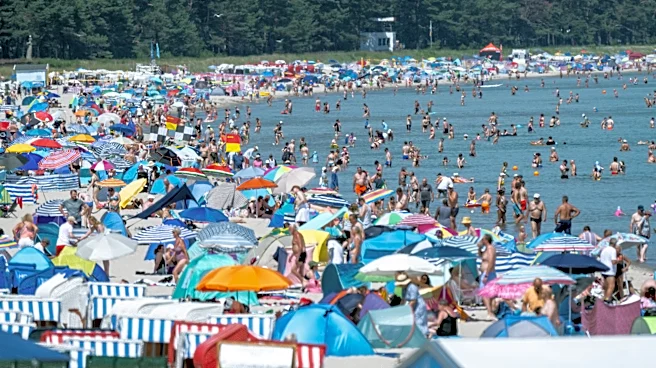
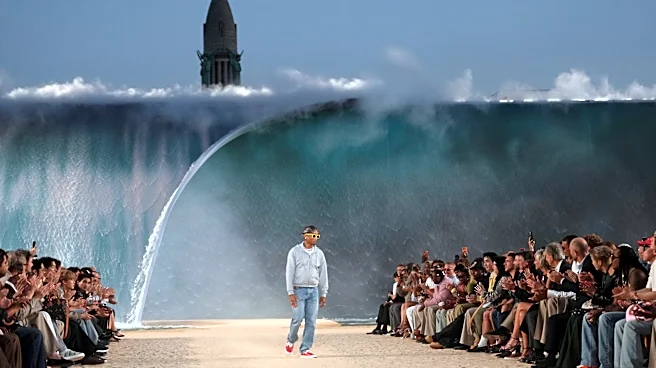
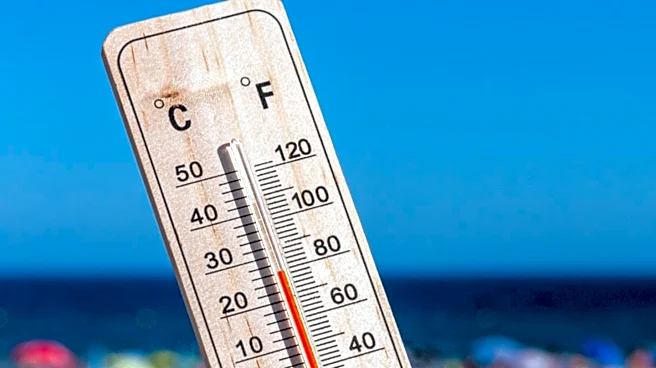
Paris Fashion Week for men's collections faced significant challenges due to an unprecedented heatwave in France, marking the hottest day in the country's recorded history. The Dior show, originally scheduled for the afternoon, was moved to the morning
to avoid the peak heat. Despite the adjustments, temperatures soared to 105 degrees Fahrenheit, prompting attendees to adopt various cooling strategies, such as using ice cubes and portable fans. Designers like Dries Van Noten and Rick Owens adapted their collections to the weather, showcasing lighter, more breathable clothing. The heatwave also led to changes in traditional greetings and attire, with many opting for more casual and comfortable clothing.
Why It's Important?
The extreme weather conditions during Paris Fashion Week highlight the growing impact of climate change on global events and industries. The fashion industry, known for its seasonal showcases, must now consider environmental factors more seriously in its planning and execution. This situation underscores the need for sustainable practices and adaptive strategies in response to climate change. The industry's response to such challenges could influence broader societal attitudes towards climate resilience and sustainability. Additionally, the event's adaptation to the heatwave may set a precedent for future fashion events worldwide, emphasizing the importance of flexibility and innovation in the face of environmental challenges.
What's Next?
As climate change continues to affect global weather patterns, the fashion industry may need to implement long-term strategies to mitigate its impact on events. This could include investing in sustainable materials, designing climate-resilient venues, and adopting more flexible scheduling. The industry's response to the heatwave may also prompt discussions on the role of fashion in promoting environmental awareness and sustainability. Stakeholders, including designers, event organizers, and attendees, may need to collaborate on developing solutions that balance creativity with environmental responsibility.