







What's Happening?
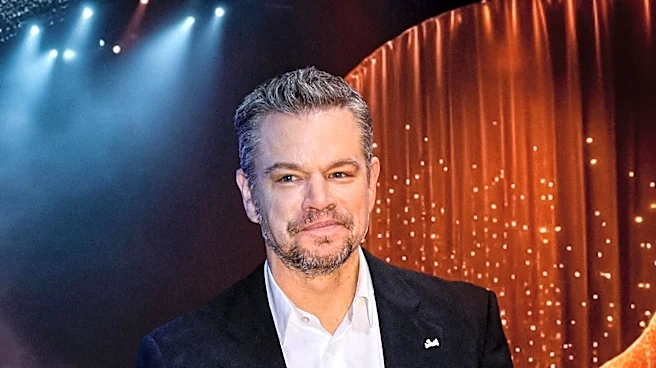
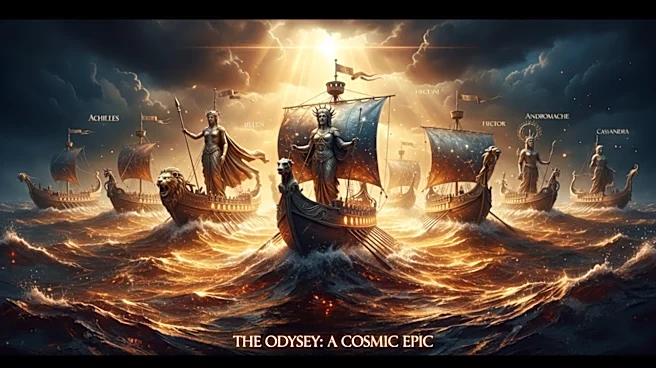
Christopher Nolan's upcoming film 'The Odyssey', starring Tom Holland and Matt Damon, has sparked discussions due to its modern adaptation choices. The film, based on Homer's ancient Greek epic, uses contemporary language, including the word 'dad' instead
of 'father', which has drawn mixed reactions. Nolan and Holland defended this choice, emphasizing accessibility and relatability for modern audiences. The film aims to bridge the gap between academic interpretations and mainstream appeal, making the classic story more approachable. This adaptation choice reflects a broader trend in making classical literature accessible to wider audiences.
Why It's Important?
The adaptation of 'The Odyssey' by Christopher Nolan highlights the ongoing debate about how classical literature should be presented to contemporary audiences. By using modern language, the film seeks to make the story more relatable and accessible, potentially attracting a broader audience. This approach challenges traditional views on preserving the authenticity of classical texts, raising questions about cultural preservation versus modernization. The film's choices could influence future adaptations of classical works, impacting how these stories are taught and appreciated in educational and cultural contexts.