
What's Happening?
U.S. boutique hotels are being advised to rethink their offerings to cater to the rapidly expanding digital nomad market. MBO Partners estimates there are 20.3 million U.S. digital nomads in 2026, a 9.7%
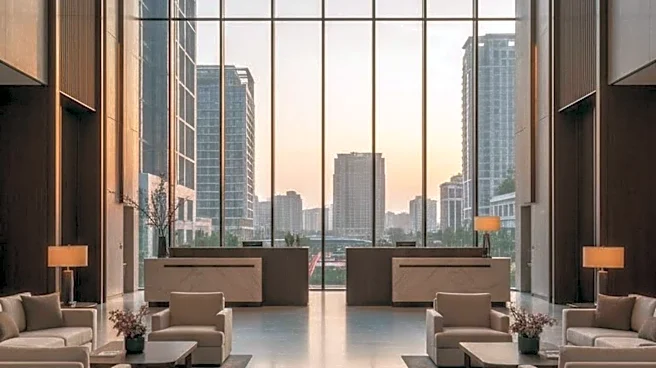
increase from 2025 and a 183% rise since 2019, representing about 12% of the U.S. workforce. This demographic primarily consists of Americans moving between U.S. cities for multi-week stays. The typical digital nomad is not the stereotypical 24-year-old backpacker; the average age is 37, with 77% being Gen Z or millennials, 51% married, and 17% traveling with children. These travelers seek more than just a desk; they require a 'base camp' that offers reliable workspaces, a sense of community, and belonging for stays of one to three months. Boutique hotels, with their existing design and neighborhood identity, are well-positioned to capture this market by offering live/work packages that include weekly/monthly rates, proper workspaces, social programming, flexibility, and local partnerships.
Why It's Important?
The significant growth of the digital nomad segment presents a substantial opportunity for the U.S. hospitality industry, particularly boutique hotels. By adapting to the needs of these long-term guests, hotels can tap into a stable revenue stream, as nomads typically stay for extended periods. This shift could lead to a re-evaluation of traditional hotel business models, encouraging more flexible pricing structures and integrated service offerings. For U.S. cities, attracting digital nomads can boost local economies beyond just hotel stays, as these individuals often spend on local services, dining, and entertainment. The emphasis on community and local partnerships also fosters deeper integration between hotels and their surrounding neighborhoods. Hotels that fail to adapt risk losing market share to coliving spaces and extended-stay chains that are already designed for this demographic. This trend also highlights the evolving nature of work and travel, pushing the hospitality sector to innovate and cater to a more mobile and experience-driven workforce.
What's Next?
Boutique hotels are encouraged to implement hybrid models that combine their nightly leisure business with dedicated 'live/work' packages for 7-30 night stays. This involves offering weekly or monthly rates, ergonomic workspaces, strong Wi-Fi, meeting rooms, social events, and partnerships with local gyms, cafes, and coworking spaces. A sensible approach is to start with a test block of rooms to measure performance against traditional nightly earnings before scaling up. The industry will likely see more hotels investing in flexible room layouts that can adapt from co-working hubs to social lounges. Furthermore, the focus on community and local integration will become a key differentiator. As the digital nomad trend continues to grow, U.S. cities and tourism boards may also develop initiatives to attract and support this demographic, potentially leading to new urban development strategies that incorporate live/work-friendly infrastructure.
Beyond the Headlines
The rise of the digital nomad reflects a broader societal shift towards remote work and a desire for greater flexibility and work-life integration. This trend challenges traditional notions of residency and employment, potentially impacting urban planning, housing markets, and local economies. The demand for 'base camps' rather than just temporary lodging suggests a deeper need for belonging and community among mobile professionals, highlighting the social and psychological aspects of remote work. For the U.S., this could lead to a re-imagining of urban spaces to better support transient populations, fostering more dynamic and interconnected communities. It also raises questions about the long-term impact on local services, infrastructure, and the potential for gentrification in popular nomad destinations. The hospitality industry's response to this trend could serve as a model for other sectors adapting to a more fluid and decentralized workforce.