




What's Happening?
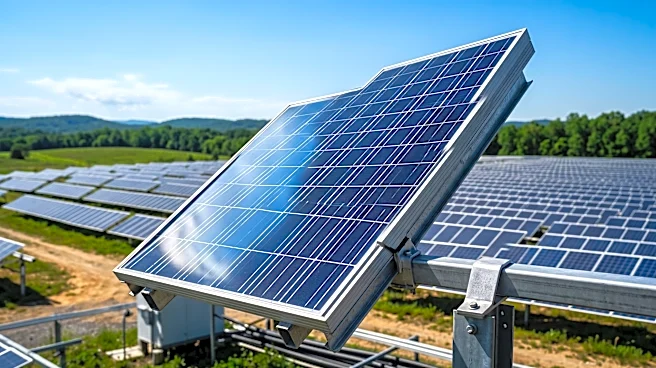
Hanwha Qcells has become the first company to successfully pass all evaluation categories in the solar industry's most rigorous module reliability tests conducted by both Kiwa PVEL and the Renewable Energy Test Center (RETC). This achievement validates
Qcells' manufacturing excellence and product quality. The company operates the only vertically integrated ingot-to-wafer-to-cell-to-module solar supply chain in Cartersville, Georgia. Modules assembled at this U.S. facility can help customers meet the requirements for the domestic content bonus under the federal Investment Tax Credit (ITC). Solar projects typically have an expected operational lifespan of 25 to 35 years, and independent lab validations from organizations like PVEL and RETC are crucial for developers, builders, lenders, and engineers in assessing a module's long-term durability.
Why It's Important?
This milestone is significant for the U.S. solar industry, particularly in the context of domestic manufacturing and tax incentives. By demonstrating superior product quality and reliability, Qcells provides a strong case for developers and investors to choose domestically produced modules, thereby qualifying for the domestic content bonus under the federal ITC. This encourages investment in U.S.-based solar manufacturing, supporting job creation and strengthening the domestic supply chain. The validation from respected independent testing labs like PVEL and RETC is critical for ensuring the long-term performance and financial viability of solar projects, which are substantial, multi-decade investments. This helps de-risk projects for developers and lenders, fostering greater confidence in the U.S. solar market.
What's Next?
Qcells plans to build on this achievement by continuing to scale its U.S. solar supply chain in Georgia. This commitment to domestic manufacturing, coupled with proven product quality, positions Qcells to be a key player in meeting the growing demand for reliable and scalable energy solutions across various U.S. markets, including utility, commercial, governmental, and residential sectors. The company's success in reliability testing is likely to influence purchasing decisions among developers and investors seeking to maximize tax benefits and ensure the longevity of their solar installations. This could also encourage other solar manufacturers to invest further in U.S. production and quality assurance to compete effectively.
Beyond the Headlines
Qcells' achievement underscores a broader trend towards prioritizing domestic content and manufacturing in the U.S. renewable energy sector. The federal Investment Tax Credit's domestic content bonus is a powerful tool designed to incentivize the creation of a robust U.S. solar supply chain, reducing reliance on foreign imports and enhancing energy independence. This move also addresses concerns about the quality and reliability of solar components, which are crucial for the long-term success and sustainability of renewable energy infrastructure. The emphasis on independent third-party validation highlights the industry's commitment to transparency and performance standards, which are essential for building trust and accelerating the adoption of solar technology across the nation.