




What's Happening?
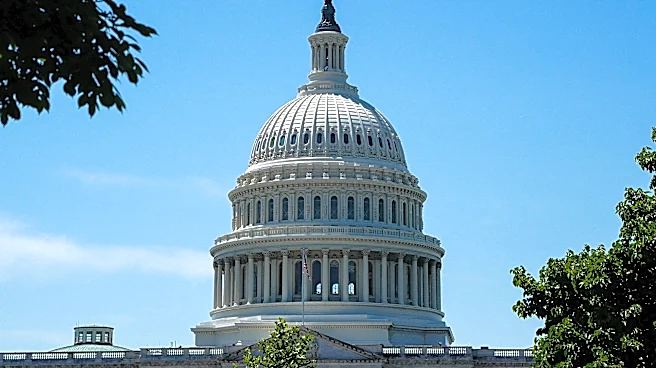
The U.S. Senate has postponed its vote on the Protect College Sports Act, a bipartisan bill co-authored by Republican Senators Ted Cruz and Eric Schmitt, along with Democratic Senator Maria Cantwell. The delay comes as the Senate adjourns for a five-week
August recess, pushing the earliest possible vote to September. The bill, if passed, would grant the NCAA and conferences limited antitrust exemptions to establish and enforce rules and policies. The SEC and Big Ten have publicly endorsed the bill, advocating for modifications that would enhance player retention and rules enforcement. A significant feature of the bill is a $27.5 million allocation for each school, with $22.5 million earmarked for player retention and $5 million for non-revenue and women's sports. The bill also seeks stronger language regarding the enforcement of name, image, and likeness (NIL) rules concerning third-party deals.
Why It's Important?
The delay in voting on the Protect College Sports Act holds significant implications for college athletics, particularly in terms of financial distribution and regulatory frameworks. The proposed $27.5 million allocation per school could substantially impact how colleges manage athlete retention and support non-revenue sports, potentially altering the competitive landscape. The bill's provisions for NIL rules enforcement are crucial as they address ongoing concerns about fairness and compliance in athlete compensation. The support from major conferences like the SEC and Big Ten underscores the bill's potential to reshape college sports governance, affecting stakeholders ranging from athletes and coaches to universities and athletic departments. The outcome of this legislation could set precedents for future policies in collegiate athletics.
What's Next?
With the Senate's recess delaying the vote, stakeholders in college sports will be closely monitoring developments as the bill awaits consideration in September. The SEC and Big Ten's involvement suggests that further negotiations and lobbying efforts may occur to refine the bill's provisions. Universities and athletic departments may begin strategizing on how to implement the proposed financial allocations and compliance measures. The delay also provides time for additional stakeholders, including other conferences and advocacy groups, to voice their positions and influence the legislative process. The outcome of the vote will likely prompt reactions from various sectors within college sports, potentially leading to adjustments in operational and financial strategies.