







What's Happening?
Chemical recycling is an advanced method that breaks down plastic into its molecular building blocks, such as monomers, oils, or gases, allowing it to be re-engineered into new plastic. This process differs from mechanical recycling, which physically
shreds, washes, and melts plastic without altering its chemical structure. While mechanical recycling is more cost-effective and has a lower carbon footprint for clean, single-type plastics, chemical recycling offers a solution for mixed, dirty, and multilayer plastic waste that mechanical methods struggle with. The goal is to create a circular economy where plastic waste is continuously reused, reducing reliance on virgin materials and minimizing landfill or incineration.
Why It's Important?
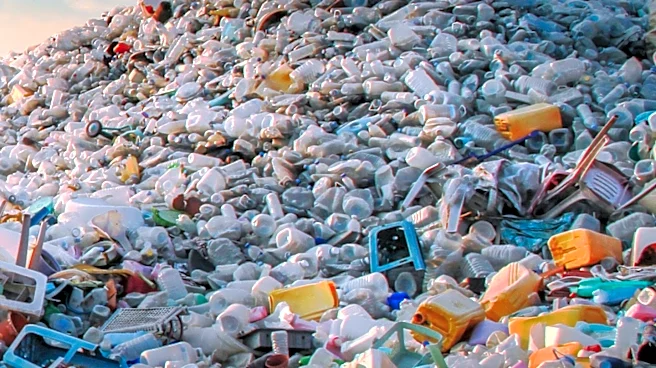
The development and scaling of chemical recycling technologies are crucial for the U.S. in addressing its significant plastic waste problem. With only a small fraction of plastic currently being recycled, a substantial amount ends up in landfills or the environment. Chemical recycling can handle a broader range of plastic waste, including packaging that is difficult to recycle mechanically, such as flexible films and multilayer materials. This capability is vital for industries that rely heavily on plastic packaging, enabling them to meet recycled-content laws and extended producer responsibility (EPR) rules. By producing virgin-quality material, chemical recycling can support high-value applications, including food-grade plastics, which mechanical recycling often struggles to achieve without extensive decontamination. This innovation can reduce the environmental impact of plastic production and consumption across the U.S., fostering a more sustainable economy.
What's Next?
The future of chemical recycling involves continued investment in research and development to improve its energy efficiency and reduce its environmental footprint. As the technology scales up, it will likely become a more integral part of a comprehensive recycling system, complementing mechanical recycling rather than replacing it. There will be ongoing discussions and efforts to ensure transparency regarding the output of chemical recycling, specifically whether the broken-down materials are genuinely converted back into new plastics or used as fuel. Regulatory bodies and non-governmental organizations will continue to scrutinize life-cycle assessments and accounting methods for recycled content. The industry will also focus on designing plastics that are easier to recycle, whether mechanically or chemically, to maximize resource recovery and minimize waste.
Beyond the Headlines
Beyond its immediate environmental and economic benefits, chemical recycling sparks a broader debate about the true meaning of a 'circular economy' for plastics. Critics raise concerns about the energy intensity and potential emissions of some chemical recycling processes, as well as the risk of the output being used as fuel rather than new plastic. This highlights the ethical imperative for transparent reporting and verified life-cycle data to ensure that these technologies genuinely contribute to sustainability rather than merely shifting environmental burdens. The controversy also underscores the need for a holistic approach that prioritizes reduction and reuse of plastics before recycling. Ultimately, the success of chemical recycling will depend not only on technological advancements but also on robust policy frameworks, industry accountability, and a societal commitment to minimizing plastic waste at every stage of its life cycle.