
What's Happening?
The Export-Import Bank of the United States (EXIM) has received an application for a direct loan or guarantee totaling $3.775 billion. This funding is intended to support the export of approximately $2.25
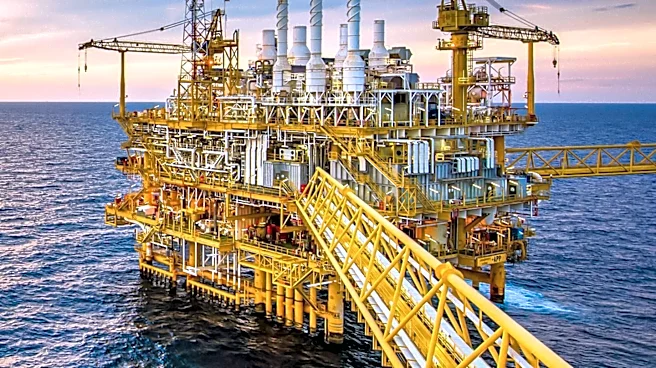
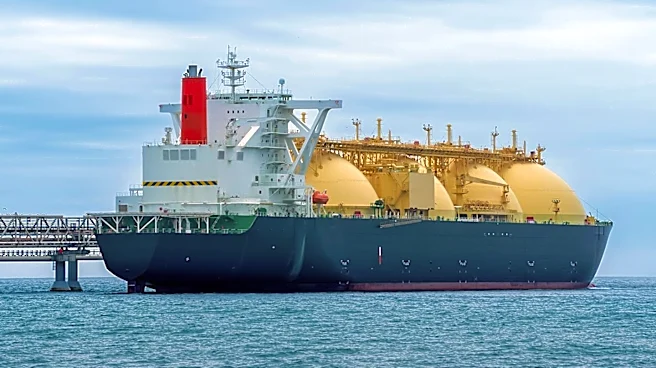
billion worth of U.S. equipment and services for the expansion of an integrated liquefied natural gas (LNG) project in Papua New Guinea. The U.S. goods and services will facilitate the production of an additional 4.0 million metric tons per annum of LNG, which is expected to be consumed in the Asia-Pacific market. The difference between the total loan/guarantee amount and the U.S. content is attributed to financing costs directly supporting the U.S. exports. EXIM has also announced its intention to conduct a detailed economic impact analysis for this project, inviting public comments on the transaction.
Why It's Important?
This potential EXIM financing is significant for several reasons. Firstly, it directly supports U.S. exports, which can bolster American manufacturing and service industries, thereby creating and sustaining jobs within the United States. The substantial value of U.S. equipment and services involved highlights the role of EXIM in facilitating large-scale international projects that benefit the U.S. economy. Secondly, the project's focus on LNG production for the Asia-Pacific market underscores the growing global demand for energy and the U.S.'s role as a supplier of critical energy infrastructure and technology. The economic impact analysis will provide transparency and allow stakeholders to understand the potential benefits and drawbacks of such a large-scale government-backed financial commitment, ensuring accountability and informed decision-making regarding taxpayer funds.
What's Next?
EXIM will proceed with a detailed economic impact analysis of the proposed $3.775 billion direct loan or guarantee. The public has been invited to submit comments on this transaction, with a deadline of 14 days from the publication date in the Federal Register. These comments will be considered as part of EXIM's assessment. Following the analysis and review of public input, EXIM will make a decision on whether to approve the loan or guarantee. If approved, the funding will enable the export of U.S. equipment and services, contributing to the expansion of the LNG project in Papua New Guinea and potentially strengthening U.S. trade ties in the Asia-Pacific region.
Beyond the Headlines
The EXIM Bank's consideration of this substantial loan for an overseas LNG project highlights the complex interplay between U.S. economic policy, global energy markets, and international development. While supporting U.S. exports and jobs is a primary objective, such projects also raise questions about environmental impact, particularly concerning fossil fuel infrastructure, and the long-term geopolitical implications of energy supply chains. The decision to conduct a detailed economic impact analysis reflects a broader trend towards greater scrutiny of government-backed financial initiatives, ensuring that the benefits outweigh potential risks and align with national interests. This case also exemplifies how U.S. financial institutions can indirectly influence energy security and economic development in other regions, particularly in the rapidly growing Asia-Pacific market.