



What's Happening?
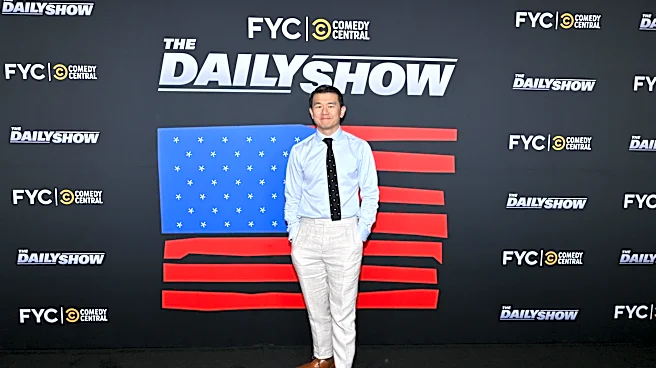
During the week of November 1, 2026, 'The Daily Show' experienced a notable increase in viewership, averaging 958,000 total viewers, a 4% rise, and 190,000 adults aged 18–49, marking a 20% increase across its four original episodes. This surge occurred
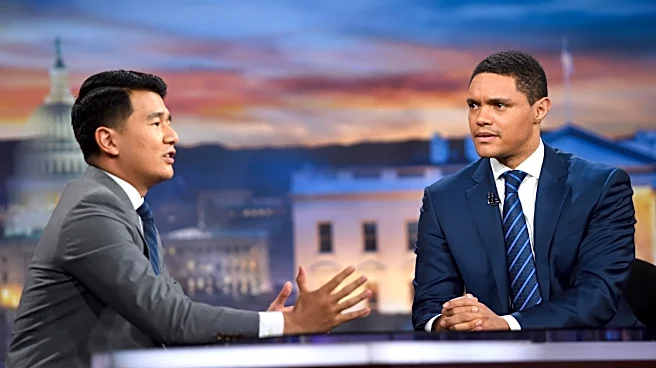
as Jon Stewart, Ronny Chieng, Michael Kosta, and Jordan Klepper each took turns hosting the program. Jon Stewart's Monday episode garnered the largest total audience of the week with 1.2 million viewers, while Michael Kosta's Wednesday post-election edition attracted the highest demographic audience with 201,000 adults 18–49. The overall positive trend for 'The Daily Show' contributed to a broader pattern of demo gains for several late-night shows during election week.
Why It's Important?
The increased viewership for 'The Daily Show,' particularly in the crucial 18–49 demographic, underscores the significant role late-night comedy programs play in political discourse and audience engagement, especially during election periods. The rotating host format, featuring personalities like Ronny Chieng, appears to be effectively attracting and retaining viewers, demonstrating the value of diverse comedic voices in political commentary. This trend is important for U.S. media as it highlights the continued relevance of traditional television platforms in an increasingly fragmented media landscape. For advertisers, a strong performance in key demographics during politically charged weeks indicates a valuable audience, potentially influencing future ad spending and programming decisions in late-night television. The ability of these shows to drive engagement around political events also reflects their impact on public opinion and civic participation.
What's Next?
The success of 'The Daily Show' with its rotating hosts, including Ronny Chieng, during election week may encourage Comedy Central to continue or expand this format. This approach allows the show to leverage different comedic styles and perspectives, potentially appealing to a broader audience base. Other late-night programs might observe these ratings and consider similar strategies to boost their own viewership, particularly during significant news cycles. The continued strong performance of late-night shows in covering political events suggests that their role as a source of news and commentary, albeit satirical, will remain vital. Future programming decisions will likely reflect the ongoing effort to balance political commentary with entertainment to maintain audience interest and demographic appeal.
Beyond the Headlines
The success of 'The Daily Show' with its diverse lineup of hosts, including Ronny Chieng, points to a deeper cultural shift in how audiences consume and engage with political satire. In an era of information overload, viewers are increasingly seeking out varied perspectives and comedic relief to process complex political events. The rotating host model not only offers fresh voices but also allows for a more dynamic and responsive commentary on current affairs. This approach can foster a more critical and engaged viewership, as different hosts bring unique insights and comedic angles to the political landscape. It also highlights the evolving nature of celebrity and influence, where comedians and public figures can significantly shape public discourse and contribute to the national conversation on important issues.