






What's Happening?
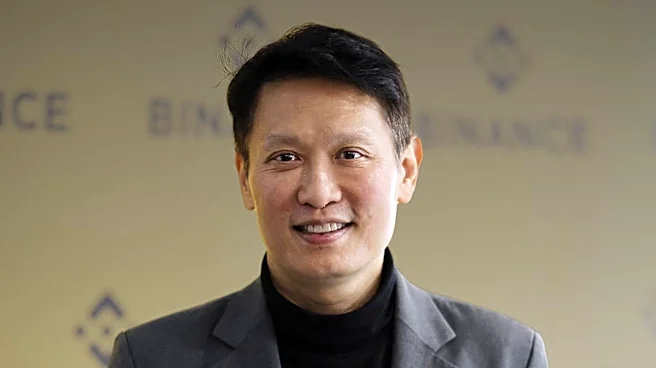
Richard Teng, Co-CEO of Binance, is scheduled to open Day 1 of Binance Blockchain Week (BBW) 2026 in Bangkok, Thailand, on November 28, 2026. His address will focus on the necessary evolutions to bring digital finance to an additional three billion users.
The event, running from November 28-29, 2026, will gather institutional investors, government officials, and technology leaders to discuss the advancements of capital markets, payments infrastructure, and financial services alongside blockchain technology. Key topics include institutional adoption, AI-powered financial tools, and the integration of digital assets into traditional finance. Yi He, Co-CEO and Co-Founder of Binance, will open Day 2, outlining Binance’s progression towards becoming a comprehensive financial platform. The conference will also feature discussions with government and regulatory leaders from emerging digital finance hubs on topics such as new financial capitals, real-world crypto payment adoption, stablecoin regulation, and securing the digital asset industry.
Why It's Important?
The discussions at Binance Blockchain Week 2026, particularly Richard Teng's opening address, are significant for the U.S. and global financial landscape as they highlight the ongoing push for broader digital finance adoption. The focus on integrating digital assets into traditional finance and the evolution of financial infrastructure directly impacts U.S. financial institutions and investors exploring blockchain technology. The participation of global regulatory leaders underscores the increasing need for clear regulatory frameworks, which could influence future U.S. policy on cryptocurrencies and blockchain. Furthermore, the emphasis on AI-powered financial tools and new economic participation models suggests potential shifts in how financial services are delivered and consumed, affecting U.S. fintech companies and consumers. The event's themes reflect a global trend towards digital transformation in finance, which U.S. businesses and policymakers must consider to remain competitive and secure in the evolving economic environment.
What's Next?
Following Richard Teng's opening remarks, Binance Blockchain Week 2026 will proceed with a comprehensive agenda over two days. Day 1 will concentrate on the evolution of capital, covering payments, institutional adoption, tokenized assets, and continuous markets. Day 2 will explore emerging applications such as AI agents, consumer products, autonomous systems, and new economic participation models. The event is expected to foster discussions among various stakeholders, including executives from major financial firms like BlackRock and Nasdaq, and representatives from regulatory bodies. These discussions could lead to new partnerships, technological advancements, and potentially influence regulatory approaches to digital assets globally, including in the U.S. The insights shared regarding real-world asset tokenization and the future of stablecoins could also shape investment strategies and product development in the coming years.
Beyond the Headlines
The emphasis on bringing digital finance to an additional three billion users, as highlighted by Richard Teng, points to a broader societal and economic transformation. This ambition extends beyond mere technological adoption, touching upon financial inclusion and the potential for new economic models. For the U.S., this could mean a re-evaluation of existing financial infrastructure to accommodate a more digitally native global economy. The discussions on regulatory coordination and cybersecurity are crucial, as the expansion of digital finance also brings challenges related to financial crime prevention and data security. The event's focus on AI's role in finance suggests a future where artificial intelligence is deeply embedded in financial workflows, raising ethical considerations around algorithmic bias and the future of work in the financial sector. Ultimately, the outcomes and insights from BBW 2026 could contribute to a long-term shift in how the U.S. and other nations approach financial innovation, regulation, and global economic integration.