






What's Happening?
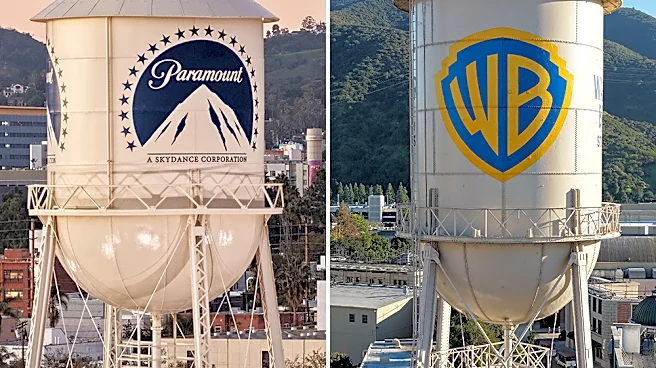
David Ellison, CEO of Skydance, announced the finalization of a $111 billion merger combining Paramount and Warner Bros. Discovery, creating a new entity named Skydance. This announcement follows a year-long bidding war and the resolution of antitrust
claims brought by 12 state attorneys general. The consent decree, which addressed concerns about concentrated control over news networks, cable TV, and the film industry, cleared the path for the merger's completion on September 21. Ellison stated that the new name, Skydance, aims to provide a distinct identity while allowing the individual brands of Paramount and Warner Bros. to remain prominent. The merger establishes Skydance as one of the largest media companies in history, encompassing film studios, broadcast and cable networks, news organizations, and streaming services.
Why It's Important?
This merger has significant implications for the U.S. media landscape, particularly concerning employment, media diversity, and consumer choice. Historically, corporate consolidations of this scale often lead to job losses, with estimates suggesting up to 30% of workers may be laid off due to overlapping business functions. Critics, including nonprofit watchdog Free Press and the Block the Merger coalition, express concerns about media monopoly, fearing that the consolidation could homogenize news content, suppress divergent viewpoints, and weaken independent journalism. The inclusion of news organizations like CNN and CBS News within the new conglomerate raises worries about potential restructuring and corporate upheaval, similar to past struggles within CBS News. The merger's impact on streaming content from platforms like HBO Max and Paramount Plus for viewers remains unclear, but the overarching concern is a reduction in competition and a potential decrease in the quality and variety of media offerings.
What's Next?
The immediate future will likely involve the integration of Paramount and Warner Bros. Discovery under the Skydance banner. This process will entail significant organizational changes, including potential layoffs as the new company streamlines operations. The consent decree included a provision for an oversight board of journalists to protect the editorial independence of CNN and CBS News. However, critics have labeled this board as 'toothless,' citing concerns about its members being appointed and paid by the company, its unclear and non-binding authority, and ultimate control resting with Ellison. Stakeholders, including employees, consumers, and media watchdogs, will closely monitor how Skydance navigates these challenges and whether the promised protections for employment and journalistic independence are effectively implemented. The long-term effects on content creation, distribution, and the competitive landscape of the U.S. media industry will unfold over time.
Beyond the Headlines
The formation of Skydance through this massive merger highlights a broader trend of consolidation within the U.S. media industry, raising fundamental questions about the future of independent journalism and media diversity. The ethical implications of a single entity controlling such a vast array of news and entertainment outlets are profound, potentially influencing public discourse and shaping cultural narratives. The concern that corporate convergence could lead to a homogenization of news content and a suppression of critical perspectives touches upon the core principles of a free press and informed citizenry. While the consent decree attempted to safeguard employment and editorial independence, the skepticism surrounding the oversight board underscores the challenge of truly mitigating the risks associated with such concentrated power. This development could accelerate shifts in how news is produced, consumed, and regulated, potentially leading to a more centralized media environment with fewer independent voices and a greater emphasis on corporate interests.