




What's Happening?
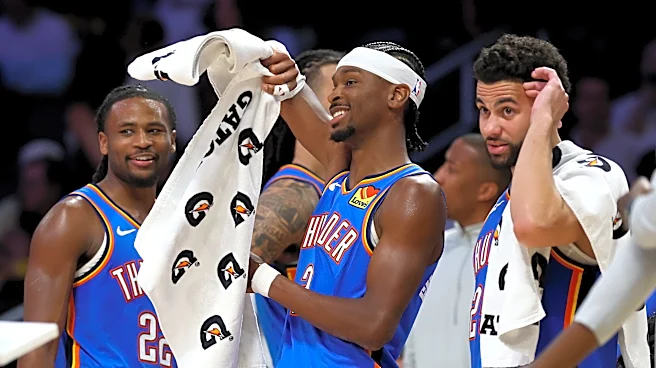
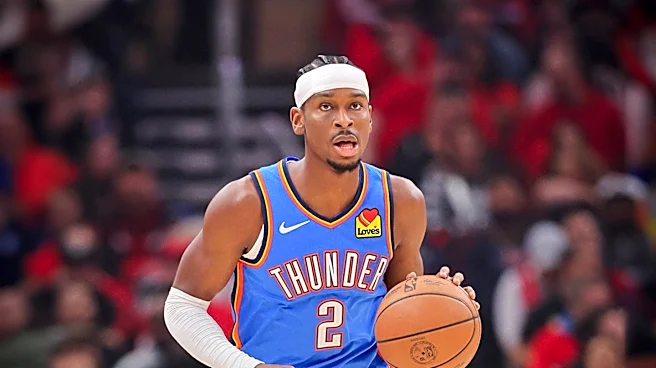
The Oklahoma City Thunder are confronting significant financial challenges due to the NBA's second tax apron, which may necessitate trading key players like Jalen Williams or Chet Holmgren. Despite successfully navigating luxury tax issues this summer,
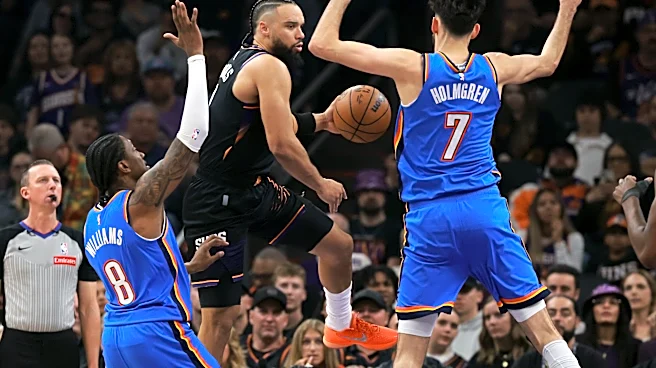
the team's payroll is projected to exceed the salary cap significantly in the coming years. The Thunder's core, including Shai Gilgeous-Alexander, Chet Holmgren, and Jalen Williams, accounts for nearly 75% of their active cap. With Gilgeous-Alexander's salary set to increase substantially in the 2027-28 season, and both Williams and Holmgren having large contracts extending four more years, the team faces difficult decisions to maintain financial flexibility and depth. While a contingency plan for Jalen Williams might exist with Ajay Mitchell, finding a replacement for Chet Holmgren is considered more challenging, though not impossible given the Thunder's scouting capabilities and draft capital.
Why It's Important?
This situation highlights the profound impact of the NBA's collective bargaining agreement (CBA) and its second tax apron on team roster construction and long-term sustainability, particularly for successful, young teams. The Thunder's predicament demonstrates how even well-managed franchises with promising young talent can be forced to dismantle their core due to financial constraints. This could set a precedent for other teams building around multiple star-level contracts, potentially altering how teams approach player extensions and salary cap management. The potential trade of a player like Holmgren, a key defensive and offensive asset, could significantly affect the Thunder's competitive window and their strategy for contending for championships. It also underscores the increasing importance of developing cost-controlled talent and making strategic personnel decisions to avoid punitive luxury tax penalties.
What's Next?
The Thunder will need to make critical decisions regarding their roster in the upcoming offseasons to address the looming financial pressures. While they avoided the second apron this summer, the issue will intensify as player salaries, particularly Shai Gilgeous-Alexander's, escalate. The team may explore further cap-clearing trades or consider moving either Jalen Williams or Chet Holmgren to maintain depth and financial flexibility. The development of younger players like Ajay Mitchell and others will be crucial in determining potential replacements for their current stars. The organization's ability to adapt to these financial realities while remaining competitive will be a key storyline in the coming years, potentially influencing future draft strategies and free-agency pursuits.
Beyond the Headlines
The Thunder's situation reflects a broader tension in professional sports between building a championship-contending team and adhering to strict financial regulations. The second tax apron, designed to promote competitive balance, inadvertently pressures successful teams to break up their core, potentially limiting dynasties and creating a more fluid player market. This scenario raises ethical questions about player loyalty versus organizational financial prudence and the long-term impact on fan engagement when beloved players are traded for financial reasons. It also emphasizes the strategic importance of scouting and player development, as teams will increasingly rely on finding and nurturing undervalued talent to circumvent salary cap limitations and maintain competitiveness.