







What's Happening?
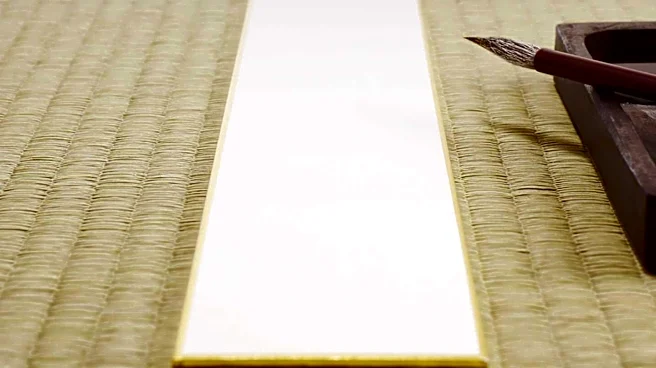
A study published in Scientific Reports by researchers at Kyushu University has found that traditional Japanese Igusa (rush grass) mats can enhance focus and reduce anxiety. Participants sitting on Igusa mats while performing tasks showed increased beta
wave activity in brain regions associated with concentration and cognitive engagement, as measured by an electroencephalograph (EEG). Additionally, gamma wave activity exhibited clear changes between resting and task periods, and alpha wave activity remained more stable during rest, suggesting improved stress resilience through more efficient relaxation. Volunteers also reported reduced tension and anxiety after using the mats. Associate Professor Kuniyoshi Shimizu, who led the study, noted that while Igusa's relaxing effects were anecdotally known in Japan, this research provides scientific evidence for its benefits, including enhanced focus and stress reduction.
Why It's Important?
This research is significant because it scientifically validates the long-held cultural belief in Japan regarding the calming and focusing properties of Igusa mats. In a world increasingly grappling with stress and attention deficits, identifying natural, non-pharmacological methods to improve mental well-being is crucial. The findings suggest that incorporating traditional materials like Igusa into modern living and working spaces could offer a simple yet effective way to enhance cognitive function and reduce anxiety. This has implications for interior design, workplace wellness programs, and even educational environments, where improved focus and reduced stress can lead to better productivity and learning outcomes. The study also highlights the potential for traditional practices and materials to offer tangible health benefits, encouraging further scientific exploration of cultural wisdom.
What's Next?
The research team plans to expand their study by replicating the experiment with a larger and more diverse participant population, as the initial study involved only 17 volunteers. They also intend to investigate the long-term effects of Igusa mat use, as the current study only evaluated short-term responses. Understanding the sustained benefits and potential cumulative effects will be crucial for broader applications. Furthermore, the researchers hope to explore new applications for Igusa in contemporary society, aiming to revitalize the use of this traditional material. This could involve developing new products or integrating Igusa into various settings beyond traditional Japanese rooms, such as offices, schools, or healthcare facilities, to promote mental well-being on a larger scale.
Beyond the Headlines
The study's findings on Igusa mats delve into the deeper connection between our physical environment and mental state, highlighting how sensory experiences—like scent and texture—can profoundly influence cognitive and emotional well-being. This goes beyond simple aesthetics, suggesting that the materials we surround ourselves with can have measurable neurological impacts. The decline in Igusa use due to modern lifestyles and housing environments, as noted by Shimizu, underscores a broader societal challenge: balancing technological advancement and convenience with the preservation of traditional practices that offer inherent benefits. This research could spark a renewed interest in biophilic design and the integration of natural elements into urban and indoor spaces, promoting a more harmonious relationship between humans and their environment. It also raises questions about how other traditional materials and practices from various cultures might offer similar, yet unexplored, health advantages.