




What's Happening?
Volvo Cars' manufacturing facility in Ridgeville, South Carolina, which commenced operations in 2018, has undergone a significant production shift. Initially, the plant focused on manufacturing Volvo S60 sedans. However, in 2024, the production of the S60 model
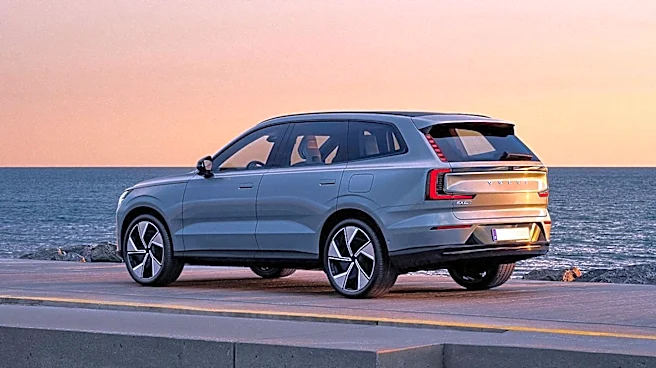
ceased, and the facility transitioned its focus entirely to the new, fully electric Volvo EX90 SUV. This strategic change highlights Volvo's commitment to its electrification goals. Furthermore, the American Volvo factory is slated to begin producing the best-selling Volvo XC60 alongside the EX90 in the latter half of 2026. The Ridgeville plant is a substantial 2.3-million-square-foot facility spanning 1,600 acres, encompassing a body shop, paint shop, battery and final assembly plants, an automobile processing center, and an office building. It also houses the Volvo Car University and Volvo Car South Carolina Technical Center, which provide training and drive research and development efforts.
Why It's Important?
This shift in production at Volvo's U.S. plant is important for several reasons. Firstly, it underscores the growing emphasis on electric vehicles within the automotive industry and Volvo's strategy to meet increasing demand for EVs. By dedicating its U.S. facility to the electric EX90, Volvo is solidifying its position in the electric vehicle market and contributing to the broader adoption of sustainable transportation. Secondly, the decision to produce the popular XC60 in the U.S. starting in 2026 could lead to increased domestic sales and potentially reduce import costs, making the vehicle more competitive in the American market. This move also strengthens the U.S. manufacturing sector, creating and sustaining jobs in South Carolina. For consumers, local production could mean quicker access to these models and potentially more tailored features for the U.S. market. The investment in the Ridgeville plant, including its technical center and university, also signifies a long-term commitment to innovation and workforce development in the U.S. automotive landscape.
What's Next?
Looking ahead, the Ridgeville, South Carolina plant will continue its full-scale production of the all-electric Volvo EX90 SUV. The next major development will be the integration of the Volvo XC60 into the production line, scheduled for the latter half of 2026. This expansion will likely involve further investment in manufacturing infrastructure and potentially an increase in the workforce to accommodate the additional model. The Volvo Car University and Technical Center at the Ridgeville site will continue to play a crucial role in training employees and driving innovation, supporting the production of these advanced vehicles. The success of the EX90 and the upcoming XC60 production will be closely watched as indicators of Volvo's electric vehicle strategy and its commitment to U.S. manufacturing. This could also influence future decisions regarding the localization of production for other Volvo models in North America.
Beyond the Headlines
The strategic decision by Volvo to concentrate its U.S. manufacturing on electric vehicles and popular SUV models reflects a broader trend in the automotive industry towards electrification and regionalized production. This move has implications beyond immediate sales and job creation, potentially influencing supply chain resilience and reducing the carbon footprint associated with vehicle transportation. By producing key models like the EX90 and XC60 domestically, Volvo can mitigate risks associated with international shipping and tariffs, while also catering more directly to the preferences and regulatory requirements of the U.S. market. This commitment to U.S. manufacturing, coupled with the focus on electric vehicles, positions Volvo as a significant player in the evolving landscape of sustainable and localized automotive production, potentially setting a precedent for other international automakers operating in the United States.