





What's Happening?
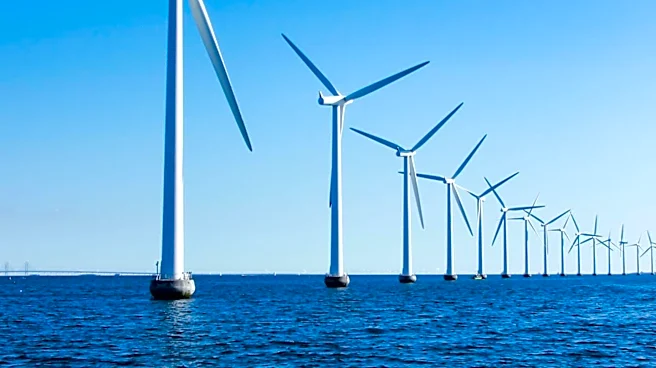
Orsted's 300MW/600MWh Iceni battery project has been selected to manage trading, optimization, and asset management for the 2.9GW Hornsea 3 offshore wind farm in the UK. This project marks the first utility-scale battery directly integrated into offshore transmission
infrastructure. The Iceni battery is part of the UK's 'pathfinder' co-location projects under the Offshore Transmission Network Review (OTNR), aiming to enhance coordination between renewable generation and storage. This integration is designed to improve the efficient use of existing grid infrastructure. The Nimbus platform, developed by Arenko, will be used to manage the complex operations, which include forecasting wind generation, allocating connection capacity in real-time, and integrating technical, data, and control systems for both assets. This approach addresses the operational and trading complexities that arise from sharing a grid connection between a wind farm and a battery.
Why It's Important?
The integration of Orsted's Iceni battery with the Hornsea 3 offshore wind farm is significant for the renewable energy sector, particularly in demonstrating advanced grid management strategies. This project showcases a model for optimizing the performance and value of co-located renewable assets, which can lead to more stable and reliable energy supply. By efficiently managing the interplay between wind generation and battery storage, the project aims to maximize grid connection utilization and overall profitability. This could set a precedent for future large-scale renewable energy developments, encouraging the adoption of unified software platforms for complex hybrid assets. The success of such projects can influence policy decisions and investment in similar integrated energy solutions, potentially accelerating the transition to a more sustainable energy grid.
What's Next?
The implementation of the Nimbus platform for the Iceni battery and Hornsea 3 offshore wind farm will involve configuring the system around Orsted's operational priorities and adapting to changing site conditions. The project's performance will likely be closely monitored as it aims to demonstrate the benefits of automation in managing large and complex assets across multiple markets. If successful, this model could be replicated in other offshore wind and battery storage projects globally, including potential applications in the U.S. renewable energy market. Future developments may include further advancements in software capabilities to handle even larger portfolios of assets and more dynamic market conditions, potentially leading to increased automation in energy trading and asset management.
Beyond the Headlines
This development highlights a broader shift in the energy industry towards more sophisticated and integrated asset management. The move from managing individual assets to optimizing whole-site performance for co-located renewables and storage addresses a critical challenge in grid stability and efficiency. Ethically, this approach supports the responsible deployment of renewable energy by maximizing its potential and minimizing waste. Legally, it may influence regulatory frameworks to better accommodate hybrid energy projects and incentivize their development. Culturally, it signifies a growing acceptance and reliance on advanced technological solutions to manage complex energy systems, moving away from traditional, siloed approaches. This could trigger long-term shifts in how energy infrastructure is designed, operated, and regulated, fostering a more interconnected and resilient energy future.