



What's Happening?
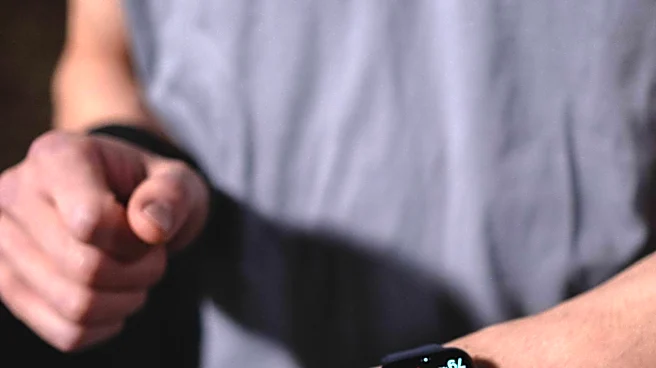
For indoor running, treadmills are more accurate in measuring distance compared to smartwatches, according to Lifehacker Senior Health Editor Beth Skwarecki. While smartwatches estimate speed based on wrist movements and arm swings, treadmills directly
measure the length of the belt passing under a runner's feet. Treadmills know the belt's length and motor speed, providing a more direct measurement of distance. Although treadmills can be slightly miscalibrated, their readings are generally closer to the actual distance covered. Smartwatches, being on the wrist, infer distance from arm swing intensity and cadence, and sometimes use outdoor GPS data to estimate stride length, which can vary significantly with speed and terrain. Skwarecki notes that her Garmin watch often incorrectly indicates a 'Pace low' during interval training on a treadmill, even when she is maintaining the correct speed, suggesting the watch's limitations in accurately tracking indoor pace.
Why It's Important?
The discrepancy in distance tracking between treadmills and smartwatches has significant implications for fitness enthusiasts and athletes who rely on precise data for training. Inaccurate readings from smartwatches can lead to misjudgments of performance, potentially affecting training regimens designed for specific speeds or distances. For individuals following heart-rate-based workouts, smartwatches remain reliable, especially when paired with a chest strap for heart rate monitoring. However, for speed- or distance-based indoor training, relying solely on a smartwatch can lead to frustration and incorrect data logging. This distinction is crucial for those aiming to achieve specific fitness goals, as it highlights the need to understand the limitations of wearable technology in certain environments and to prioritize the more accurate data source for specific metrics.
What's Next?
As fitness technology continues to evolve, manufacturers may focus on improving the accuracy of smartwatches for indoor activities. This could involve developing more sophisticated algorithms that better interpret wrist movements in conjunction with other sensors, or integrating new technologies that can more directly measure foot movement or ground contact time indoors. Users, in the meantime, should continue to prioritize treadmill readouts for distance and speed during indoor runs. For those who wish to log accurate data from their smartwatch, manual calibration or editing the distance in the app after a treadmill workout remains a viable option. Future advancements might also include better integration between treadmills and smartwatches, allowing for more seamless and accurate data exchange.
Beyond the Headlines
This issue underscores a broader challenge in the realm of wearable technology: the balance between convenience and accuracy. While smartwatches offer unparalleled convenience for tracking various health and fitness metrics, their reliance on indirect measurements can sometimes compromise data precision, particularly in controlled environments like a treadmill. This highlights the importance of critical evaluation of fitness data and understanding the methodologies behind different tracking devices. It also raises questions about the potential for over-reliance on technology without considering its inherent limitations. For serious athletes, this means a continued need for traditional measurement methods or more specialized equipment, while for casual users, it emphasizes that fitness trackers are tools to aid, not replace, an understanding of one's own body and effort.