







What's Happening?
ExxonMobil CEO Darren Woods stated that global diesel supplies are under significant pressure due to geopolitical conflicts disrupting refining operations and fuel shipments, leading to higher prices. In an interview with CNBC, Woods highlighted that while
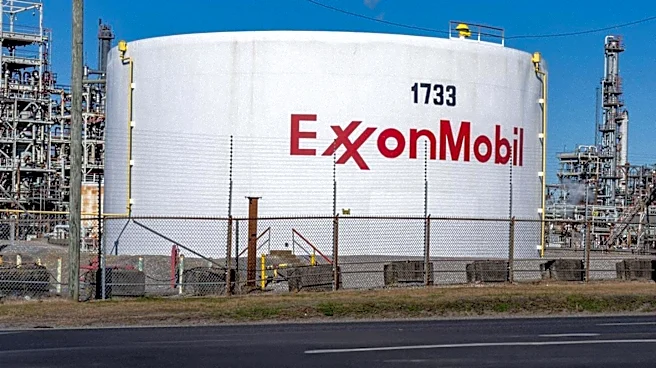
crude oil supplies have somewhat recovered, refining capacity remains the primary constraint on the availability of diesel and other refined products. ExxonMobil is currently operating its refineries at record utilization levels, achieving record-high diesel yields. The company plans to invest 'several billion dollars' in its refineries to increase diesel production, with an expectation to boost distillate throughput by approximately 100,000 barrels per day. Woods cited the potential closure of the Strait of Hormuz amid the U.S.-Israel conflict with Iran, alongside Ukrainian attacks on Russian refineries, as major disruptions to global fuel supplies.
Why It's Important?
The identified 'key crunch point' in diesel supply has significant implications for the U.S. economy and various industries. Diesel is crucial for economic growth, powering transportation, agriculture, and industrial sectors. A sustained shortage or price increase in diesel could lead to higher operational costs for businesses, potentially impacting supply chains, food prices, and overall inflation. ExxonMobil's substantial investment in refinery capacity aims to mitigate these pressures by increasing domestic production, which could stabilize prices and ensure greater energy security for the U.S. The geopolitical factors, such as tensions in the Middle East and conflicts in Eastern Europe, underscore the vulnerability of global energy markets and the need for resilient domestic infrastructure to buffer against international disruptions.
What's Next?
ExxonMobil's planned investments of 'several billion dollars' in refineries are expected to increase distillate throughput by about 100,000 barrels per day. This expansion aims to alleviate some of the pressure on global diesel supplies. The company's focus on maximizing refinery throughput and increasing diesel yields will continue. The effectiveness of these investments in stabilizing diesel prices and availability will depend on the timeline of these projects and the evolving geopolitical landscape. Continued monitoring of international conflicts, particularly those affecting key shipping lanes like the Strait of Hormuz and oil-producing regions, will be crucial as these events directly influence global fuel markets and the success of ExxonMobil's efforts.
Beyond the Headlines
The emphasis on refining capacity as the critical bottleneck, rather than crude oil supply, highlights a deeper structural issue in the global energy system. This situation suggests that even with ample crude oil reserves, the ability to process it into usable fuels like diesel is limited, creating a vulnerability that geopolitical events can exploit. The strategic importance of refining infrastructure could lead to increased national and corporate focus on modernizing and expanding these facilities. Furthermore, the ongoing disruptions underscore the interconnectedness of global energy markets and the ripple effects of regional conflicts on international supply chains and consumer costs, potentially accelerating discussions around energy independence and diversification.