
What's Happening?
European Union emissions trading rules are significantly increasing operating costs for U.S.-based cruise lines, particularly those headquartered in Florida, such as Carnival, Royal Caribbean Group, and
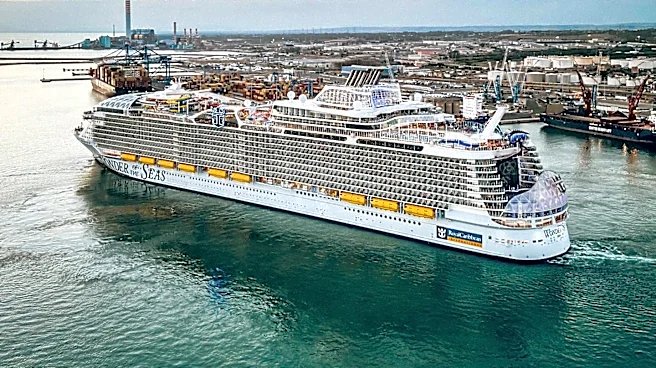
Norwegian Cruise Line. The EU's Emissions Trading System (ETS), which began including large ships in 2024, requires vessels of at least 5,000 gross tons to purchase tradable allowances for greenhouse gas emissions on voyages involving EU ports. This rule applies regardless of the ship's registration or owner's location. For example, a voyage between Miami and Barcelona is charged for half of its covered emissions, while emissions produced while docked in a European port are fully covered. Carnival estimates its 2026 cost from these regulations to be approximately $170 million, a substantial increase from $91 million in 2025. The rules have also expanded to include methane and nitrous oxide, in addition to carbon dioxide, further impacting cruise ships that use liquefied natural gas, such as those operating from Port Canaveral.
Why It's Important?
These European regulations have a direct and significant financial impact on the U.S. cruise industry, especially on Florida-based companies that dominate the global market. The increased operating costs, projected to be hundreds of millions of dollars annually, could lead to higher passenger prices, affecting consumer demand and the industry's profitability. This situation highlights the vulnerability of U.S. industries to international regulatory frameworks, particularly in a globalized sector like cruise tourism. Florida's economy, heavily reliant on the cruise industry for jobs and tourism revenue, could experience ripple effects. Companies may be forced to re-evaluate their European deployment strategies, potentially shifting vessels to other markets or accelerating investments in more fuel-efficient ships. This also underscores the growing global pressure for decarbonization in shipping, pushing U.S. companies to adapt to stricter environmental standards even when operating outside U.S. jurisdiction.
What's Next?
U.S. cruise lines, particularly those based in Florida, will continue to grapple with the escalating costs imposed by European emissions regulations. Companies like Carnival will need to decide how much of these increased operating expenses will be absorbed and how much will be passed on to consumers through higher ticket prices. This situation may also influence strategic decisions regarding fleet deployment, with companies potentially re-evaluating which ships operate on European routes and which destinations remain economically viable. Furthermore, the regulations are likely to accelerate investment in more fuel-efficient vessels and alternative propulsion technologies to reduce emissions and associated costs. Florida officials and port authorities will need to account for these European policies in their long-term planning for infrastructure and industry support, as these external factors directly impact cruise traffic, employment, and investment in the state.
Beyond the Headlines
The European Union's emissions regulations on the cruise industry represent a broader trend of extraterritorial environmental policy, where one jurisdiction's rules impact global industries. This raises complex questions about international trade, sovereignty, and the harmonization of environmental standards. For the U.S. cruise industry, it's not just a financial burden but a catalyst for technological innovation and a re-evaluation of business models. The inclusion of methane and nitrous oxide in the regulations, gases often associated with LNG, challenges the perception of LNG as a 'clean' transitional fuel, pushing the industry towards even more advanced decarbonization solutions. This situation could also spark debates within the U.S. about implementing similar domestic carbon pricing mechanisms or incentives to level the playing field and encourage green shipping practices, potentially leading to new federal policies and industry standards. The long-term cultural shift towards sustainable travel will likely be influenced by such regulations, impacting consumer choices and the industry's public image.