





What's Happening?
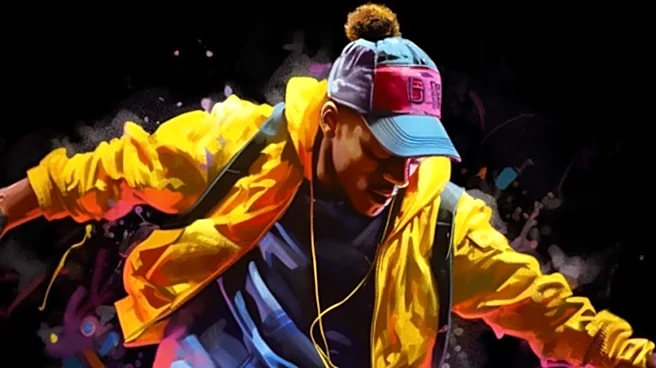
Artist Selorm Attikpo, also known as Selormjay in Accra's hip-hop scene, is presenting his exhibition 'Mending to Preserve' at the African Diaspora Art Museum of Atlanta (ADAMA). The exhibit aims to correct misconceptions about hip-hop, particularly regarding
its African origins and evolution. Attikpo challenges the notion that hip-hop is merely music, emphasizing its role as a culture of resistance, education, and community. He also refutes the assumption that African hip-hop is simply a copy of its American counterpart, asserting its unique cultural significance and independent development. The exhibition, a culmination of his Bridge Residency program, features photography, mixed-media paintings, and archival materials from yoyo tinz, his platform for documenting African hip-hop culture. Attikpo deliberately chose Atlanta for the exhibit, recognizing its own journey from being overlooked in hip-hop narratives to becoming a significant hub.
Why It's Important?
Attikpo's exhibition is crucial for broadening the understanding of hip-hop's global reach and diverse expressions. By challenging the Eurocentric or American-centric narratives often associated with the genre, it highlights the rich and independent contributions of African artists and communities. This re-education is vital for fostering a more inclusive and accurate historical record of hip-hop, ensuring that the cultural significance and innovative spirit of African hip-hop are recognized. The exhibit also underscores the importance of archiving and preserving the stories of hip-hop pioneers, particularly in Africa, to prevent their narratives from being lost or misrepresented. This effort contributes to a more comprehensive appreciation of hip-hop as a truly global art form with varied origins and purposes.
What's Next?
The 'Mending to Preserve' exhibition will run at ADAMA through September 5th, offering a platform for continued dialogue and education about African hip-hop. Attikpo's work is likely to inspire further research and exhibitions that explore the global dimensions of hip-hop. The emphasis on archiving and documenting the stories of pioneers suggests a growing movement to preserve hip-hop's history from diverse perspectives. This could lead to increased collaborations between cultural institutions in the U.S. and Africa, fostering greater understanding and appreciation of shared cultural heritage. The success of this exhibit may also encourage other artists to use their platforms to challenge cultural misconceptions and promote a more nuanced understanding of global artistic movements.
Beyond the Headlines
Attikpo's work delves into the deeper implications of cultural appropriation and the power dynamics inherent in global cultural exchanges. By asserting the originality and purpose of African hip-hop, he challenges the tendency to view non-Western cultural forms as derivative. This initiative has ethical implications for how cultural narratives are constructed and disseminated, advocating for authenticity and self-representation. It also highlights the role of art as a tool for resistance and education, demonstrating how creative expression can be used to correct historical inaccuracies and empower marginalized voices. The long-term impact could be a more equitable and diverse global cultural landscape, where the contributions of all communities are recognized and celebrated on their own terms.