




What's Happening?
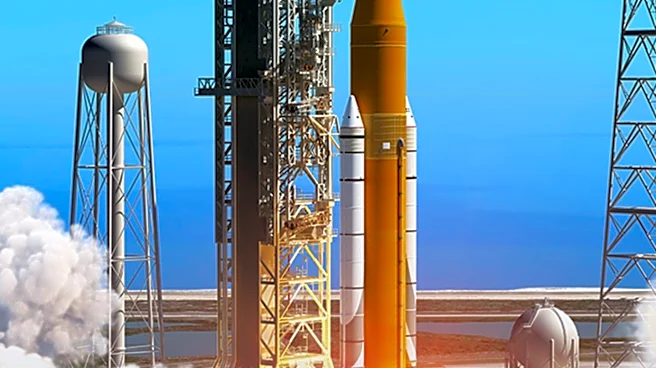
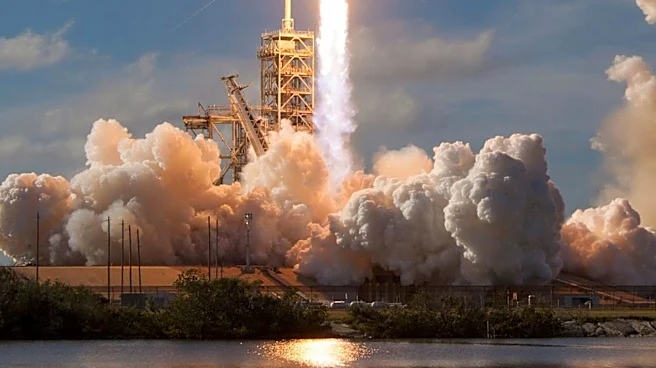
United Launch Alliance (ULA) is experiencing financial difficulties following the grounding of its Vulcan Centaur rocket. The grounding is due to performance challenges, specifically an anomaly with the solid rocket booster nozzle, which occurred during
two launches. Lockheed Martin, which owns 50% of ULA, has provided a bank guarantee for a loan to support ULA's financial needs. The maximum potential future payments for this guarantee amount to $500 million. Despite these challenges, ULA remains optimistic about its future, citing a backlog of over 80 launches. The company aims to increase its launch rate significantly, although the Vulcan rocket has not flown since a mission in February 2026.
Why It's Important?
The financial challenges faced by ULA have broader implications for the aerospace industry, particularly for its corporate parents, Lockheed Martin and Boeing. The grounding of the Vulcan rocket affects ULA's ability to fulfill its launch commitments, potentially impacting its reputation and future contracts. Lockheed Martin's reduced profit forecast for its space division highlights the financial strain caused by the Vulcan issues. The situation underscores the risks associated with technical anomalies in the aerospace sector and the financial dependencies between major industry players. The resolution of these challenges is crucial for maintaining ULA's position in the competitive space launch market.
What's Next?
ULA is working to resolve the technical issues with the Vulcan rocket, with Northrop Grumman redesigning components of the solid rocket motors. The company has not announced a specific timeline for resuming Vulcan launches. Meanwhile, Lockheed Martin and Boeing may need to provide additional financial support to ULA. The aerospace community will be closely monitoring ULA's progress in addressing these challenges and its ability to meet its ambitious launch schedule. The outcome will influence future business strategies and partnerships within the industry.