

What's Happening?
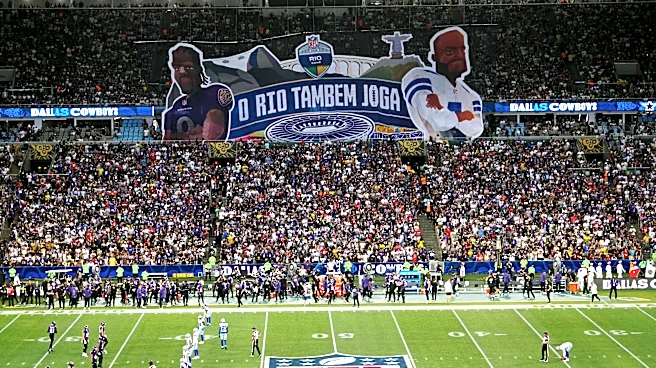
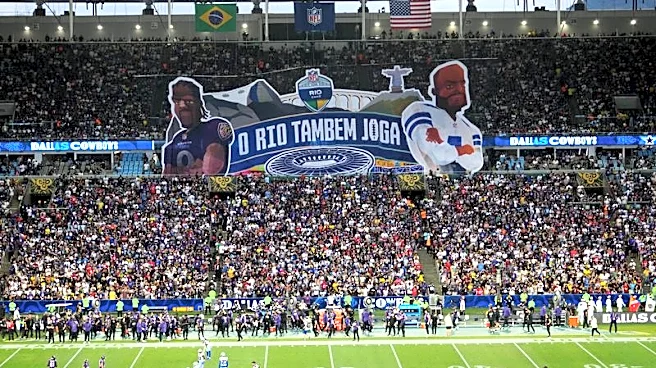
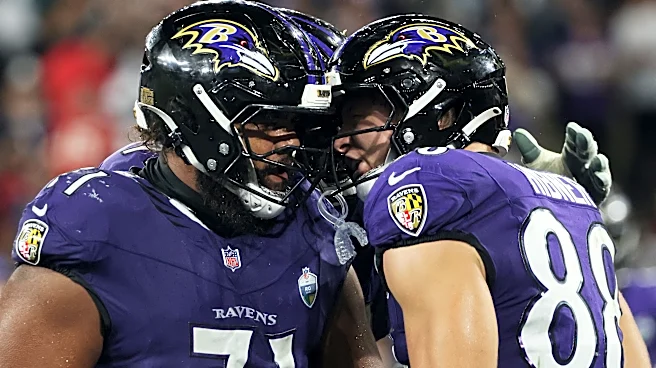
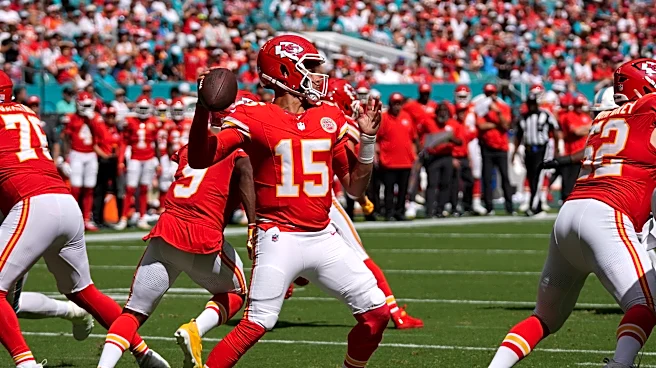
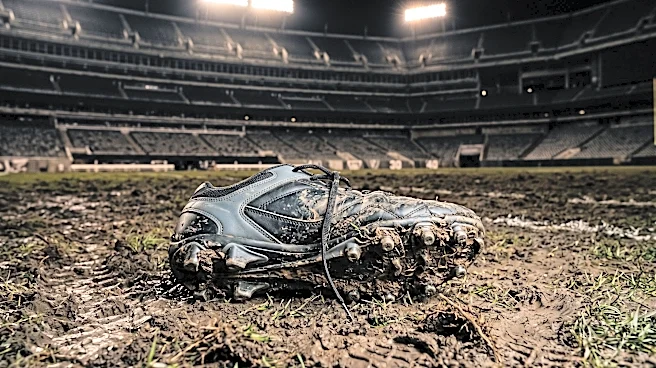
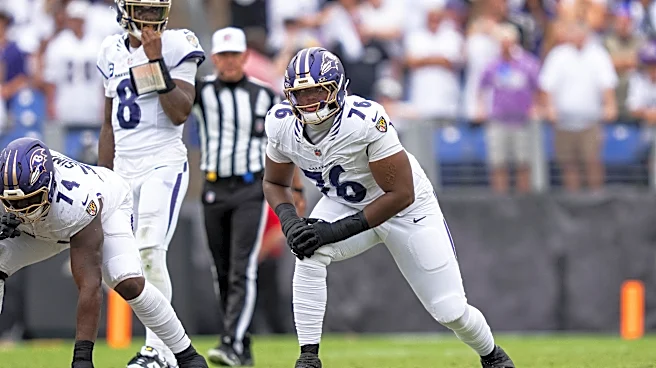
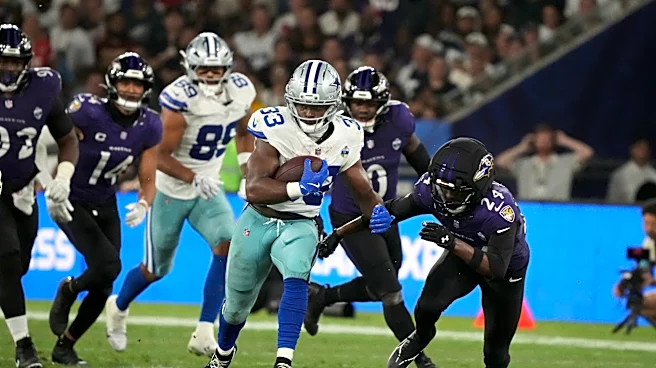
Dallas Cowboys rookie safety Caleb Downs openly criticized the field conditions at Maracanã Stadium in Brazil following the team's recent loss to the Baltimore Ravens. Downs, speaking on his 'Downs2Business' podcast, described the turf as initially 'okay'
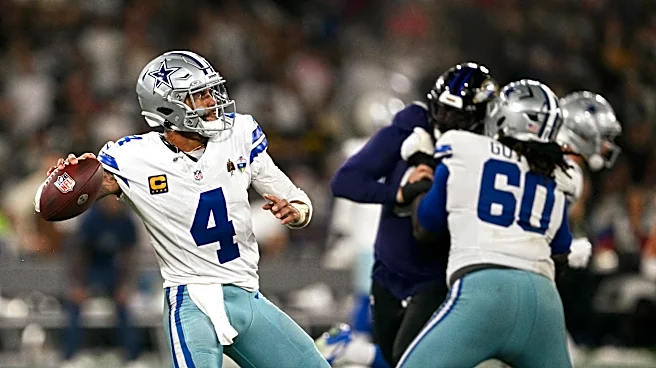
but rapidly deteriorating into 'pretty much just dirt' by the end of the game. Despite the NFL and NFLPA clearing the surface after testing, and the Cowboys preparing with seven-stud cleats, players experienced significant slipping. Downs acknowledged the poor conditions but emphasized that the team would not use it as an excuse for their 34-31 defeat in the NFL's first regular-season game in Rio de Janeiro. He highlighted that both teams played on the same surface and that the Cowboys had 'a lot of things to clean up' beyond the field conditions. Downs made a significant play during the game, stopping Ravens running back Derrick Henry on a critical fourth-and-1.
Why It's Important?
The criticism from a prominent rookie like Caleb Downs regarding international game field conditions highlights ongoing concerns about player safety and game integrity in the NFL's global expansion efforts. As the league increasingly schedules games outside the U.S., ensuring optimal playing surfaces is crucial to protect athletes from potential injuries and maintain the quality of play. Poor field conditions can impact game outcomes, as players' ability to perform at their peak is compromised, potentially leading to uncharacteristic mistakes or injuries. This incident could prompt the NFL to re-evaluate its protocols for assessing and preparing international venues, especially as it seeks to grow its global fanbase and revenue streams. The players' union may also leverage such feedback to advocate for stricter standards, ensuring that the pursuit of international markets does not come at the expense of player well-being or competitive fairness.
What's Next?
Following Caleb Downs' comments, the NFL and NFLPA may face increased scrutiny regarding their field assessment processes for international games. It is likely that future international venues will undergo even more rigorous inspections and potentially require higher standards for turf maintenance to prevent similar issues. The Cowboys, now 1-2, will need to address their on-field performance, as Downs noted, focusing on 'things to clean up' rather than dwelling on external factors. This incident could also influence player perceptions and willingness to participate in international games if concerns about playing conditions persist. The league will likely aim to reassure players and teams that their safety is a top priority as it continues its global outreach, potentially leading to more transparent communication about field preparations for upcoming international matchups.
Beyond the Headlines
This situation extends beyond a single game's field conditions, touching upon the broader implications of the NFL's international strategy. The league's expansion into new markets, while financially lucrative, introduces logistical challenges, including ensuring consistent playing environments. The incident underscores a potential tension between commercial interests and player welfare. If players consistently voice concerns about substandard conditions in international venues, it could lead to pushback from teams and the players' union, potentially impacting the long-term viability and appeal of these global games. It also raises questions about the cultural adaptation required for international events, as different regions may have varying standards or expertise in maintaining sports facilities. The NFL's response to this feedback will be critical in shaping its reputation as a global sports entity that prioritizes its athletes' safety and the integrity of its competition.