




What's Happening?
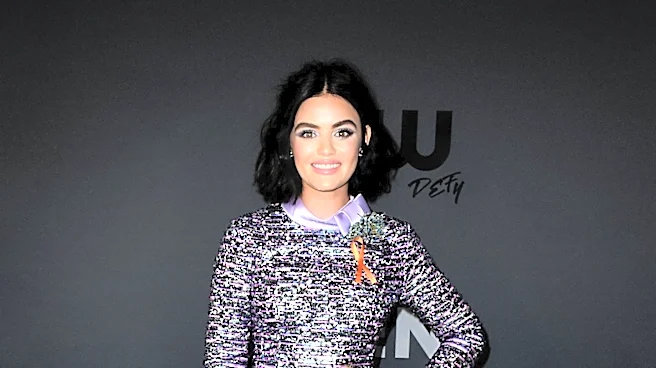
Actress Lucy Hale has addressed backlash regarding a recent reunion video with her former 'Pretty Little Liars' co-star, Ian Harding. The video, posted on Instagram on October 24, recreated a pose from the show and was captioned, 'A little older and wiser
but the same two idiots!' while promoting their upcoming holiday film, 'The Twelve Dates of Christmas.' The post drew criticism because their characters, Aria and Ezra, had a controversial on-screen romance where Ezra was Aria's high school English teacher. Critics argued the video glamorized an inappropriate teacher-student relationship. Hale clarified in an Instagram video on October 25 that the reunion was intended to celebrate her nearly 20-year friendship with Harding, not to romanticize the fictional relationship. She acknowledged that the Aria and Ezra storyline is 'problematic' and 'did not age well,' admitting it would likely not be portrayed the same way if the show were made today. Harding also previously described the relationship as 'wildly inappropriate' but defended the creative distinction between depicting and endorsing such a relationship.
Why It's Important?
This incident highlights the evolving societal perspectives on fictional narratives, particularly those involving sensitive themes like teacher-student relationships. The immediate and strong public reaction to Hale and Harding's reunion underscores a growing demand for media accountability and ethical representation in storytelling. For the entertainment industry, it serves as a reminder that past content can be re-evaluated through a contemporary lens, potentially impacting how older shows are perceived and consumed. Actors and creators are increasingly expected to engage with the social implications of their work, even years after its initial release. This situation also reflects the power of social media in shaping public discourse and holding public figures accountable, demonstrating how quickly a seemingly innocuous post can ignite widespread debate and necessitate a public response from those involved.
What's Next?
Following Lucy Hale's clarification, the immediate public discourse around this specific reunion video may subside. However, the broader conversation about the ethical implications of fictional teacher-student relationships in media is likely to continue. The entertainment industry may face ongoing pressure to critically assess and potentially recontextualize older content that features such problematic dynamics. Future productions are likely to be more cautious in depicting similar storylines, reflecting a heightened awareness of audience sensitivities and societal norms. Actors and creators might also become more deliberate in how they engage with their past roles, especially those that have become subjects of ethical debate, ensuring their public statements and actions align with contemporary values. This event could contribute to a broader shift in how media narratives are constructed and discussed, emphasizing responsibility in storytelling.
Beyond the Headlines
The controversy surrounding Lucy Hale's reunion video delves into deeper cultural and ethical considerations regarding the consumption and interpretation of fictional media. It highlights the tension between artistic freedom and social responsibility, particularly when narratives touch upon power imbalances and potentially harmful dynamics. The 'Pretty Little Liars' storyline, while fictional, reflects a societal discomfort with relationships that blur ethical boundaries, especially those involving minors and figures of authority. This incident also underscores the concept of 'aging out' for certain narratives, where what was once accepted or even romanticized in popular culture is now viewed critically through a more informed and sensitive lens. It prompts a re-evaluation of how audiences engage with and critique media, moving beyond simple entertainment to consider the underlying messages and their real-world implications, even years after a show's initial run. This ongoing dialogue contributes to a broader cultural shift towards more conscious and ethical storytelling.