





What's Happening?
A recent transatlantic flight on TAP Air Portugal's A321LR in business class from Washington to Lisbon provided a pleasant experience, despite being a narrow-body jet. The traveler, who generally prefers wide-body aircraft, found the flight comfortable
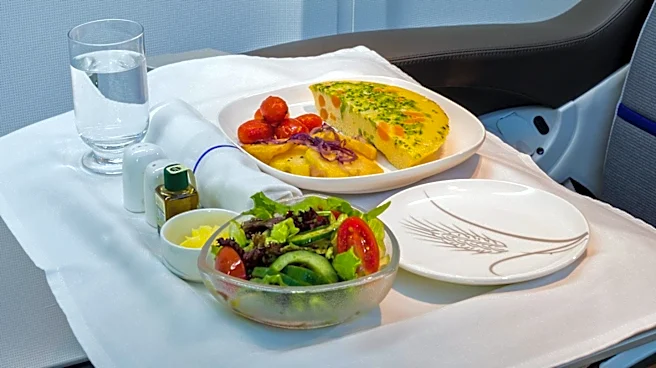
due to a decent meal, a cool cabin, and a lie-flat bed. Dinner, served promptly after takeoff, included soup, an entree (pasta with marinara sauce and short ribs), and tiramisu. Breakfast, a deli plate with fruit and espresso, was also offered. The flight attendants were professional, the lavatory was clean, and the in-flight entertainment selection was respectable. The cabin's individual air vents contributed to a comfortable sleeping environment. The flight landed at a remote stand in Lisbon, requiring passengers to be bussed to the terminal.
Why It's Important?
This report highlights the increasing viability of narrow-body aircraft for transatlantic business class travel, a trend that could significantly impact the airline industry and passenger expectations. As airlines like TAP Air Portugal, JetBlue, Aer Lingus, and SAS utilize A321neo operators for longer routes, it offers travelers more direct flight options to various destinations without the need for connecting flights through major hubs. This can enhance convenience and potentially reduce travel times. For airlines, deploying smaller, more fuel-efficient narrow-body jets on these routes can be a cost-effective strategy, allowing them to open new markets or increase frequency on existing ones, thereby optimizing their fleet utilization and potentially increasing profitability. The positive passenger experience on such a flight could encourage more airlines to adopt similar strategies, reshaping the competitive landscape of transatlantic air travel.
What's Next?
The traveler plans to provide a full review of the TAP Air Portugal A321LR business class experience, offering more details on the in-flight entertainment, service, and amenities. Additionally, the traveler will share insights into the EES immigration process at Lisbon Airport. The future of TAP Air Portugal's Star Alliance membership is also a point of interest, especially with Air France-KLM reportedly attempting to acquire a stake in the company. This potential acquisition could lead to significant changes in TAP's route network, partnerships, and overall market position, impacting transatlantic travel options and alliances. The continued success and passenger acceptance of narrow-body jets on long-haul routes will likely influence future aircraft orders and route planning for airlines globally.
Beyond the Headlines
The increasing use of narrow-body aircraft for transatlantic flights challenges traditional notions of long-haul comfort and efficiency. While some travelers may initially be hesitant about flying a smaller plane across the ocean, positive experiences like this one could shift consumer perceptions and preferences. This trend also underscores the advancements in aircraft technology, making smaller jets capable of longer ranges and offering amenities previously exclusive to wide-body planes. The competitive dynamics within airline alliances, as exemplified by Air France-KLM's interest in TAP, suggest a broader industry consolidation and strategic realignments. These shifts could lead to a more interconnected global air travel network, but also raise questions about market concentration and consumer choice in the long run. The focus on individual air vents and comfortable sleeping conditions highlights a growing passenger demand for personalized comfort, even in more compact cabin environments.