






What's Happening?
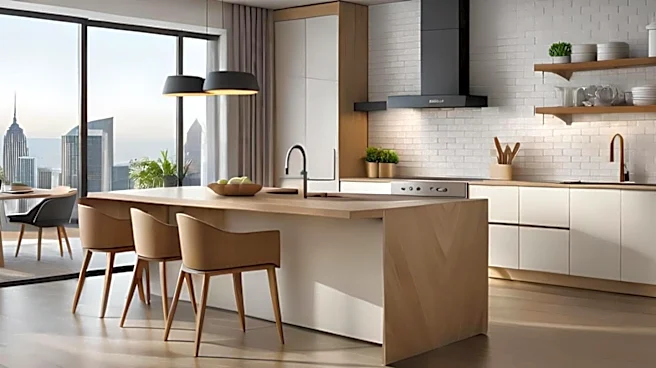
Houzz Pro, an AI-powered software for construction and design professionals, is enabling designers to bring iconic looks from past decades into contemporary spaces. The platform's 3D Floor Planner and AI-powered product rendering allow professionals to create
immersive, realistic visualizations of their designs. This technology helps designers like Donna Gutto of May Construction to channel the glamour of the Jazz Age into modern bathrooms, or Carrie Lucke of Carrie Lucke Designs to blend family heirlooms with 1950s style in living and dining rooms. Rochelle Grass of Dwelling Place Interiors used the tool to create a 1960s Space Age-inspired kids' retreat, while Danielle Diaz of Elle Luxury Interiors reimagined 1990s Miami glam for a cabana primary suite. The software allows for precise incorporation of specific colors, finishes, and materials, ensuring clients can visualize the exact products being specified rather than approximations.
Why It's Important?
This advancement in design technology is significant for the U.S. interior design and construction industries. By providing highly realistic 3D visualizations, Houzz Pro helps designers secure projects more effectively, as clients can confidently commit to a vision before work begins. This reduces misunderstandings and potential costly changes during the construction phase. The ability to integrate AI-rendered products means that designers can showcase actual items, enhancing client trust and satisfaction. For homeowners, this translates to a more personalized and accurate representation of their future living spaces, allowing them to see how historical design elements can be seamlessly integrated with modern functionality and aesthetics. This tool also streamlines the design process, from concept to contract, by facilitating material quantity calculations, estimates, and proposals.
What's Next?
The continued integration of AI and 3D visualization tools like Houzz Pro is likely to become a standard in the U.S. interior design and construction sectors. Future developments may include more sophisticated AI capabilities for design suggestions, automated material sourcing, and enhanced virtual reality experiences for clients. This technology could also lead to increased collaboration between designers, contractors, and suppliers, creating a more efficient and interconnected industry. As more professionals adopt these tools, the expectation for detailed, realistic design presentations will rise, pushing the industry towards greater technological adoption and innovation. The focus will remain on bridging the gap between a designer's vision and a client's understanding, making the design process more transparent and engaging.
Beyond the Headlines
The trend of reimagining historical design elements with modern technology reflects a broader cultural shift towards valuing both heritage and innovation. This approach allows for a sense of nostalgia and timelessness in design, while simultaneously embracing contemporary functionality and sustainability. Ethically, the transparency offered by 3D rendering can empower clients, giving them more control and clarity over their investments. Culturally, it signifies a move away from purely minimalist or transient trends towards designs that tell a story and incorporate personal history. The ability to blend old and new, as seen in the examples provided, suggests a future where homes are not just aesthetically pleasing but also deeply personal and reflective of individual narratives, facilitated by advanced technological tools.