



What's Happening?
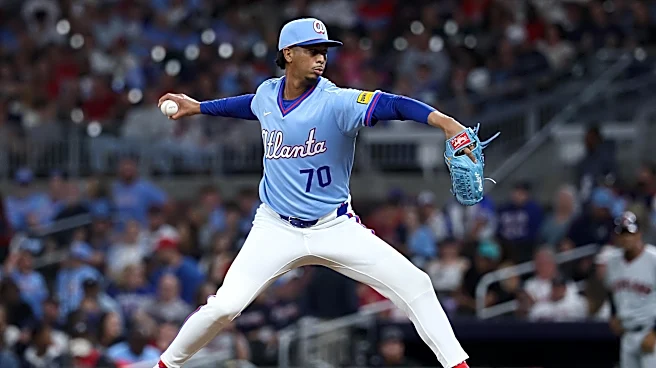
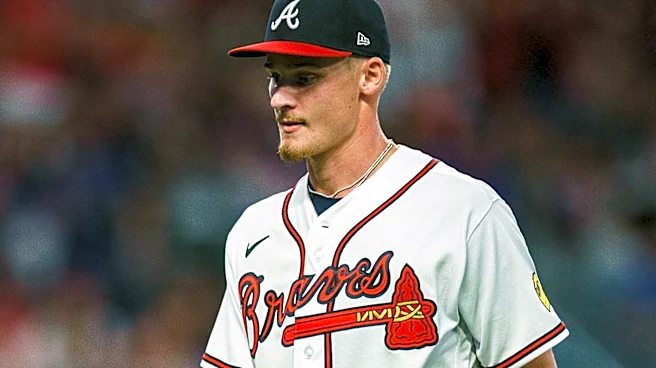
The Atlanta Braves are confronting significant uncertainty regarding their starting pitching rotation for the 2027 season, primarily due to elbow injuries sustained by key pitchers Spencer Strider and Bryce Schwellenbach during the 2026 season. Braves president
of baseball operations Alex Anthopoulos acknowledged in October that the organization cannot rely on these two pitchers to handle full starting workloads next season. This situation leaves questions about their availability and overall effectiveness. Currently, the Braves' rotation is anchored by Chris Sale, with Bryce Elder and Grant Holmes also in the mix. The team is reportedly considering aggressive offseason moves to strengthen its roster, with starting pitching being a top priority. One MLB analyst from Bleacher Report, Tim Kelly, has predicted that Atlanta might sign former Boston Red Sox starter Sonny Gray to a two-year, $50 million contract to help stabilize the rotation.
Why It's Important?
The health of Spencer Strider and Bryce Schwellenbach is crucial for the Atlanta Braves' aspirations for the 2027 season, particularly their goal of a World Series run. Significant elbow injuries to two potential frontline starters create a substantial void and place immense pressure on the remaining pitching staff. This situation forces the Braves' front office to actively seek external solutions, potentially involving substantial financial investment in free agents like Sonny Gray. The outcome of these decisions will directly impact the team's competitiveness in the National League. A strong, stable pitching rotation is often considered a cornerstone of championship-contending teams, and any instability in this area could undermine the Braves' overall performance and fan expectations. The team's ability to navigate these injuries and secure reliable pitching will be a key determinant of their success.
What's Next?
The Atlanta Braves are expected to pursue an aggressive offseason strategy focused on acquiring an established starting pitcher to mitigate the risks associated with Strider's and Schwellenbach's injuries. The prediction of signing Sonny Gray to a significant contract highlights the potential direction the team may take. While Gray would not be a long-term solution at 37, a two-year deal could provide crucial stability while younger pitchers recover. The Braves will likely monitor the recovery progress of Strider and Schwellenbach closely, as their return to full health would significantly bolster the team's depth. The team's actions in the free-agent market and potential trade discussions will be closely watched as they aim to solidify their rotation for the upcoming season. There are no confirmed reports of mutual interest between Gray and the Braves, so further developments are anticipated as the offseason progresses.
Beyond the Headlines
The recurring issue of elbow injuries in baseball, particularly among pitchers, raises broader questions about player workload, training methodologies, and injury prevention strategies within MLB. The Braves' situation with Strider and Schwellenbach underscores the fragility of pitching careers and the constant challenge teams face in managing player health. This scenario could influence future contract negotiations, with teams potentially incorporating more injury-related clauses or investing further in advanced sports science and rehabilitation programs. The reliance on veteran pitchers like Sonny Gray, even for short-term solutions, also reflects a strategic trade-off between long-term development and immediate competitive needs. This dynamic impacts not only individual team strategies but also the overall player market, as demand for reliable pitching remains consistently high, driving up costs and competition for available talent.