





What's Happening?
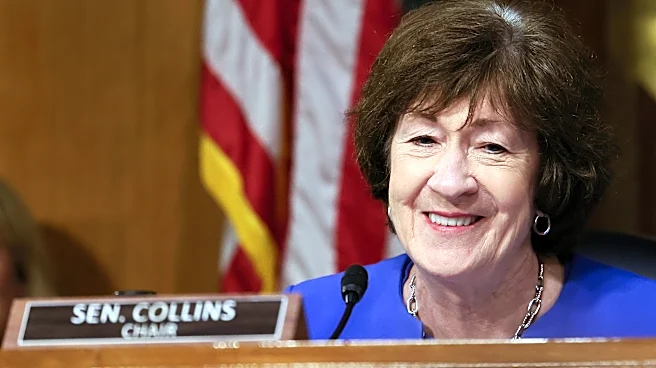
Federal Reserve Bank of Boston President Susan M. Collins recently visited Killington, Vermont, to meet with local business leaders and discuss the state's economic future. During her visit, Collins heard significant concerns regarding rising housing
costs and challenging demographic trends, including a high median age, the nation’s lowest fertility rate, and a decreasing population. Mike Solimano, CEO of Killington Resort, detailed the resort's substantial investments, including approximately $80 million over three years, to improve facilities. He also highlighted a $7 million investment in employee housing, providing about 350 beds, a necessity that did not exist a decade ago. These discussions, which also included members of Vermont Businesses for Social Responsibility, underscored the increasing cost strains on state businesses, with participants using terms like 'reckoning' and 'a looming cloud' to describe the situation. Ethan Platt, president of American Meadows, noted that despite growing revenues, profitability is stagnant due to these rising costs.
Why It's Important?
The issues raised by Boston Fed President Collins and Vermont business leaders are critical for the U.S. economy, particularly for states facing similar demographic and housing challenges. Vermont's experience with escalating housing costs and a shrinking, aging workforce reflects broader national trends that can impede economic growth and stability. For businesses, the inability to find affordable housing for employees directly impacts labor supply and operational costs, potentially stifling expansion and innovation. The situation in Vermont illustrates how local economic conditions, such as housing affordability and labor market tightness, can have significant implications for regional and national economic health. If businesses cannot attract and retain workers due to high living costs, it can lead to reduced productivity, slower economic development, and increased pressure on social services. This scenario highlights the interconnectedness of housing, demographics, and economic vitality across the nation.
What's Next?
The ongoing discussions initiated by Federal Reserve Bank of Boston President Collins are likely to inform future policy considerations at both federal and state levels. The insights gathered from Vermont's business community could influence the Federal Reserve's understanding of regional economic pressures, potentially impacting monetary policy decisions. At the state level, Vermont policymakers may face increased pressure to address housing affordability and demographic challenges through legislative action, such as incentives for affordable housing development or programs to attract and retain younger populations. Businesses, like Killington Resort, will likely continue to innovate in addressing employee housing needs, potentially setting precedents for other companies in high-cost areas. The continued monitoring of these trends by economic leaders and policymakers will be crucial in developing strategies to mitigate the adverse effects of rising costs and demographic shifts on regional economies.
Beyond the Headlines
Beyond the immediate economic concerns, the situation in Vermont points to deeper societal shifts with long-term implications. The demographic trends, characterized by a low fertility rate and an aging population, suggest a fundamental change in the workforce structure and consumer base. This could lead to a re-evaluation of traditional economic models and a greater emphasis on automation, remote work, and attracting diverse talent pools. The ethical dimension of housing affordability also comes into play, as the lack of accessible housing can exacerbate social inequalities and limit economic opportunities for lower and middle-income individuals. Furthermore, the increasing investment by businesses in employee housing, while a necessary response, could signal a shift in corporate responsibility, where companies play a more direct role in addressing community infrastructure needs. This trend could redefine the relationship between employers, employees, and local governments in managing the social and economic well-being of communities.