






What's Happening?
Capital Clean Energy (NASDAQ:CCEC) announced a significant financial improvement in its third quarter of 2026 earnings call, held on October 30, 2026. The company reported a net income from continuing operations of $34.6 million, marking a 52% increase
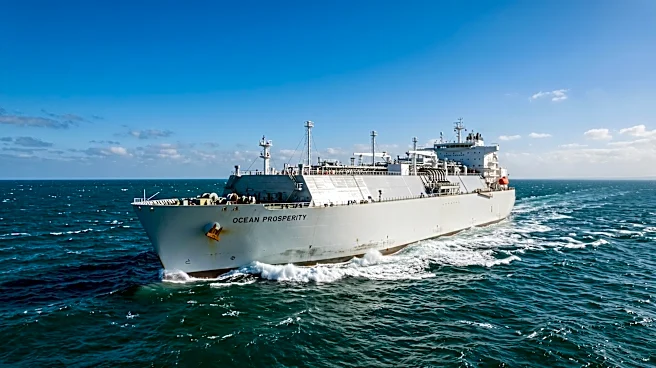
year-over-year. This growth is primarily attributed to the contribution of new vessel deliveries to the company's revenue. These new vessels are part of an expansion strategy that incorporates long-term contracted revenues, which are designed to protect the business from the volatility of spot market rate fluctuations. Nikos Tripodakis, Chief Commercial Officer and Head of LNG Commercial, highlighted that long-term charters with high-quality counterparties have successfully insulated the company from recent spot market volatility, indicating a deliberate and limited market exposure strategy. The company's focus on modern, fuel-efficient gas carrier fleets also plays a crucial role in its financial performance, as these vessels command premiums due to lower boil-off rates, leading to substantial daily cost savings for charterers.
Why It's Important?
This financial performance by Capital Clean Energy underscores the growing demand for long-haul shipping, particularly in the liquefied natural gas (LNG) sector. The expansion of liquefaction capacity, especially from Atlantic producers, necessitates more vessel capacity to transport LNG to Asian markets, thereby increasing ton-mile demand. This trend is significant for the global energy market as it indicates a shift in energy supply chains and a reliance on efficient shipping solutions. The company's strategy of securing long-term charters provides revenue stability, which is crucial in a volatile shipping market, offering a model for other players in the industry. Furthermore, the emphasis on modern, fuel-efficient vessels highlights an industry-wide move towards operational efficiency and cost reduction, driven by high natural gas prices. This efficiency can translate into competitive advantages and potentially lower overall costs for energy consumers, albeit indirectly through reduced shipping expenses.
What's Next?
Capital Clean Energy is focused on managing its transition towards an anticipated shipping market supply inflection point in 2028. The company will continue to track vessel delivery schedules and capital allocation closely to navigate this period. The ongoing expansion of liquefaction capacity, particularly from U.S. projects, is expected to further drive demand for LNG shipping, potentially creating a 'double bubble' effect for the industry. This suggests continued growth opportunities for companies like Capital Clean Energy that are well-positioned with modern fleets and long-term contracts. The company's ability to maintain its strategy of long-term charters and efficient vessel operations will be key to its sustained success in a dynamic global energy landscape. Stakeholders will be watching how the company adapts to market changes and capitalizes on the increasing demand for LNG transportation.
Beyond the Headlines
The success of Capital Clean Energy reflects broader trends in the global energy transition and geopolitical shifts. The increasing demand for LNG, particularly from the U.S. to Asia, highlights the evolving energy security concerns and the role of natural gas as a transitional fuel. The company's focus on long-term contracts and modern, efficient vessels also points to a strategic response to environmental pressures and economic realities. While LNG is a fossil fuel, its role in displacing more carbon-intensive energy sources in some regions, coupled with the efficiency gains in its transportation, presents a complex picture for sustainability. The investment in advanced shipping technology also suggests a move towards optimizing existing energy infrastructure while the world gradually shifts towards cleaner alternatives. This dynamic interplay between traditional energy sources, technological advancements, and market demands will continue to shape the future of global energy logistics.