


What's Happening?
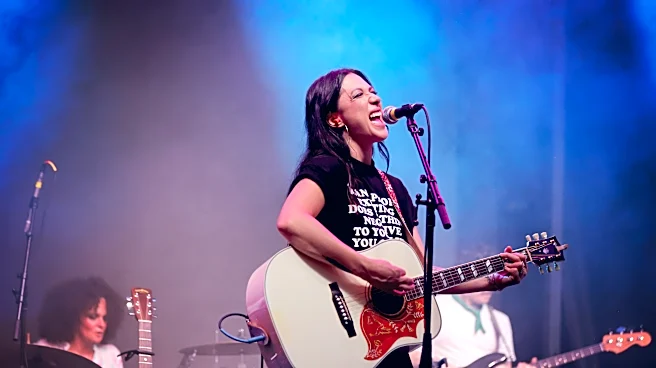
Country music star Kacey Musgraves has canceled three dates from her 'Middle of Nowhere' tour, including the opening night in Chicago. The cancellations, which also affect shows in Boston and Brooklyn, were communicated to fans via Ticketmaster emails,
with no official explanation provided. This development follows a trend of concert cancellations by other artists, including Harry Styles, who recently canceled a show in Brazil due to health issues. The music industry is experiencing a wave of cancellations, with some attributed to 'Blue Dot Fever,' a term used to describe poor ticket sales as indicated by available seats on Ticketmaster's seating charts.
Why It's Important?
The cancellation of tour dates by prominent artists like Kacey Musgraves highlights ongoing challenges in the live music industry. These cancellations can have significant financial implications for artists, venues, and local economies that rely on concert tourism. The trend also reflects broader issues such as fluctuating demand for live events and the impact of economic conditions on consumer spending. As artists navigate these challenges, the industry may need to adapt by exploring new models for live performances and audience engagement.
What's Next?
The music industry may see further adjustments as artists and promoters respond to the current landscape. This could include exploring alternative revenue streams, such as virtual concerts or exclusive online content, to offset potential losses from canceled shows. Additionally, there may be increased efforts to understand and address the factors contributing to 'Blue Dot Fever,' such as pricing strategies and marketing approaches. Fans can expect continued communication from artists regarding rescheduled dates or refunds, as the industry seeks to maintain trust and engagement.
Beyond the Headlines
The trend of concert cancellations raises questions about the sustainability of traditional touring models in the current economic climate. It also highlights the importance of mental health and well-being for artists, who may face pressure to perform despite personal or health challenges. As the industry evolves, there may be a greater emphasis on creating supportive environments for artists and exploring innovative ways to connect with audiences. This shift could lead to more diverse and inclusive experiences for both performers and fans.