


What's Happening?
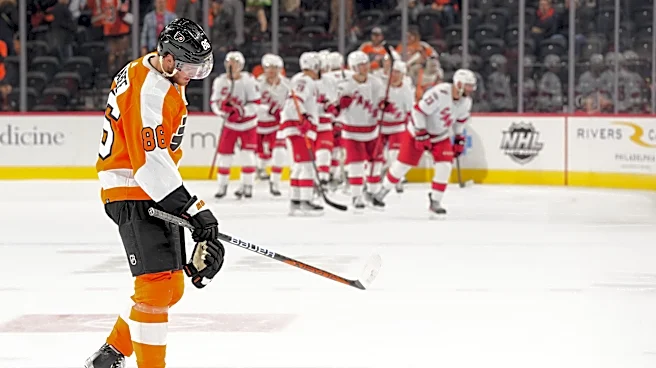
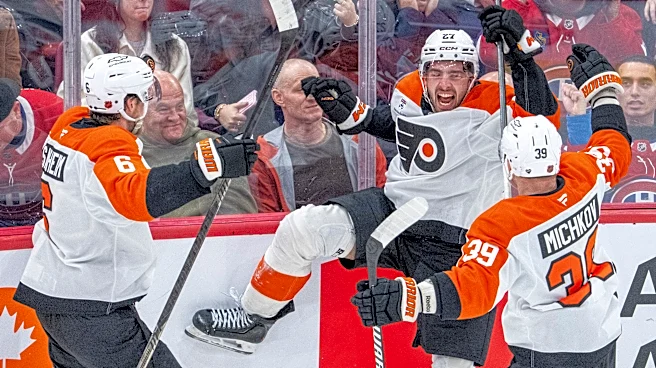
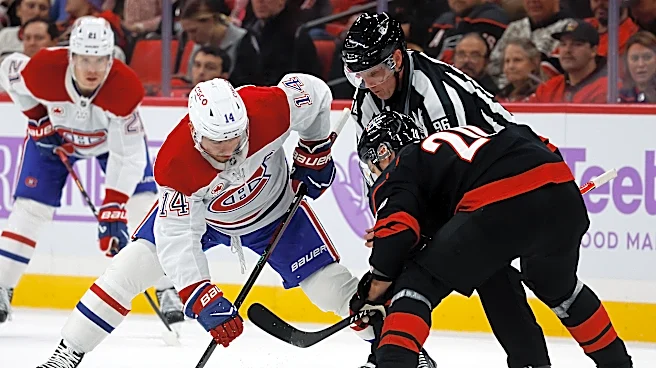
The Philadelphia Flyers have implemented significant changes to their lineup and defensive pairings for their upcoming game against the Montreal Canadiens. Head coach Rick Tocchet has unveiled four entirely new forward lines, with no line remaining untouched
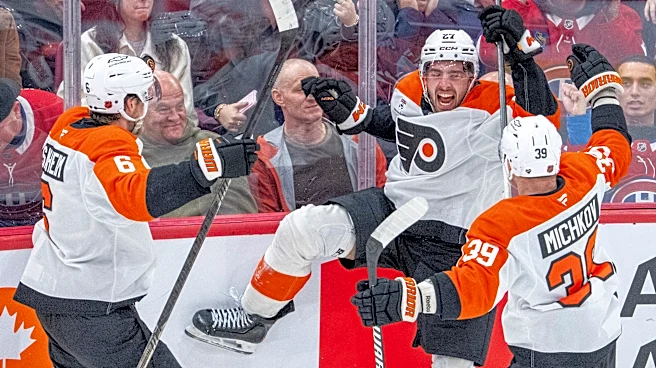
from the previous game. Notably, the trio of Porter Martone, Matvei Michkov, and Noah Cates has been split up, with Cole Knuble replacing Martone on that line. Porter Martone will now play alongside Denver Barkey and Owen Tippett. Additionally, Trevor Zegras has been moved to the fourth line with Sean Couturier and Noel Acciari, following a recent dip in performance. On the defensive end, Travis Sanheim and Rasmus Ristolainen now form the top pairing, while Cam York and Jamie Drysdale are reunited as the middle pair. Nick Seeler and Oliver Bonk complete the third defensive pairing. Dan Vladar is slated to start in goal, making his first appearance since a loss to Edmonton.
Why It's Important?
These extensive lineup adjustments signal a strategic shift by the Flyers' coaching staff to address recent performance issues and optimize player chemistry. The demotion of Trevor Zegras to the fourth line indicates a clear message from the coaching staff regarding accountability and performance expectations, potentially serving as a 'wake-up call' for the player. The reshuffling of defensive pairings, particularly placing Rasmus Ristolainen on the top pair, could be a move to showcase him for potential trade opportunities, given his pending unrestricted free agency. The reunion of Cam York and Jamie Drysdale on the second pair suggests an attempt to rekindle past chemistry and improve defensive stability. These changes aim to spark offensive production and tighten defensive play, which could significantly impact the team's ability to climb in the Metropolitan Division playoff picture.
What's Next?
The immediate next step for the Philadelphia Flyers is to observe how these new line combinations and defensive pairings perform in their game against the Montreal Canadiens. The coaching staff will closely monitor player chemistry, offensive output, and defensive solidity to assess the effectiveness of these changes. Depending on the outcome, further adjustments may be made in subsequent games. The performance of players like Trevor Zegras in his new role will be under scrutiny, as will the defensive pairings' ability to create a more cohesive unit. A positive showing could solidify these new configurations, while a poor performance might lead to further experimentation. The team has upcoming games against Washington and Vancouver, providing additional opportunities to evaluate the new strategies.
Beyond the Headlines
The Flyers' decision to overhaul their lineup, even after a comeback win, highlights a proactive coaching philosophy focused on continuous improvement rather than complacency. This approach suggests a willingness to make bold moves to achieve desired results, potentially fostering a more competitive internal environment among players. The strategic placement of certain players, such as Ristolainen, could also indicate broader organizational goals beyond immediate game outcomes, hinting at potential future roster moves. This level of tactical flexibility and willingness to experiment could be a defining characteristic of the team's strategy moving forward, impacting player development and long-term team building. It also underscores the constant pressure on professional athletes to perform, as even established players can face demotions if their output falters.