


What's Happening?
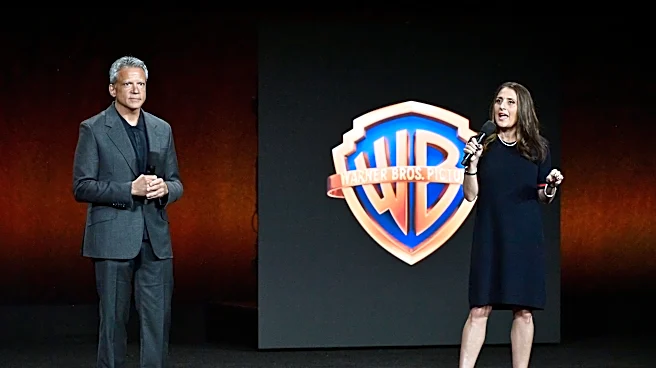
Warner Bros. film chiefs Mike De Luca and Pam Abdy have been dismissed from their positions as part of a significant restructuring following the merger of Warner Bros. and Paramount into Skydance. This move comes despite their reputation for developing
ambitious and director-driven projects, which led to Oscar-winning hits in 2025, including 'Weapons,' 'Sinners,' and 'One Battle After Another.' However, a less successful year in 2026 provided Skydance head David Ellison with the justification to replace them. Ellison has reportedly brought in his own Paramount studio heads, Josh Greenstein and Dana Goldberg, who are noted for their experience in streaming films. This change is part of a broader pattern of Ellison replacing existing Warner Bros. executives with his own personnel, including the recent firing of Bill Damaschke, head of Warner Bros. Pictures Animation, who was also replaced by Paramount animation staff.
Why It's Important?
The dismissal of Mike De Luca and Pam Abdy signals a significant shift in the creative direction and strategic priorities for Warner Bros. under the new Skydance ownership. De Luca and Abdy were known for fostering critically acclaimed, director-led projects, suggesting a potential move away from such ventures towards more commercially focused or streaming-oriented content, as indicated by the backgrounds of their replacements. This could impact the types of films Warner Bros. produces, potentially favoring broader appeal over artistic ambition. The broader executive reshuffle, including the animation division, indicates a consolidation of power and a preference for personnel aligned with Ellison's vision, which may lead to a more unified but potentially less diverse creative output across the studio's various divisions. This could affect talent relationships and future project greenlighting within the industry.
What's Next?
The immediate consequence of these executive changes will likely be a re-evaluation of ongoing and planned projects at Warner Bros. The new leadership, Josh Greenstein and Dana Goldberg, are expected to steer the studio's film slate in a direction that aligns with Skydance's broader strategy, potentially emphasizing streaming content or more commercially viable blockbusters. This could lead to the cancellation or significant alteration of projects initiated under De Luca and Abdy. Furthermore, the departure of key creative executives may prompt other talent, including directors and producers who valued the previous leadership's approach, to reconsider their future collaborations with Warner Bros. The industry will be closely watching for announcements regarding new film slates and strategic partnerships to understand the full extent of Skydance's influence on the studio's future.
Beyond the Headlines
This executive overhaul at Warner Bros. reflects a larger trend in Hollywood where corporate mergers often lead to significant leadership changes and shifts in creative philosophy. The move by David Ellison to install his own team from Paramount suggests a desire for tighter control and a unified vision across the newly merged entity, potentially at the expense of established creative autonomy. This could lead to a more homogenized film landscape if studios prioritize brand synergy and commercial viability over unique storytelling. The situation also highlights the precarious nature of executive roles in the entertainment industry, where even successful track records can be overturned by new ownership. The long-term implications could include a more risk-averse approach to filmmaking, impacting the diversity of cinematic offerings and potentially stifling innovative projects that might not fit a predetermined commercial mold.