






What's Happening?
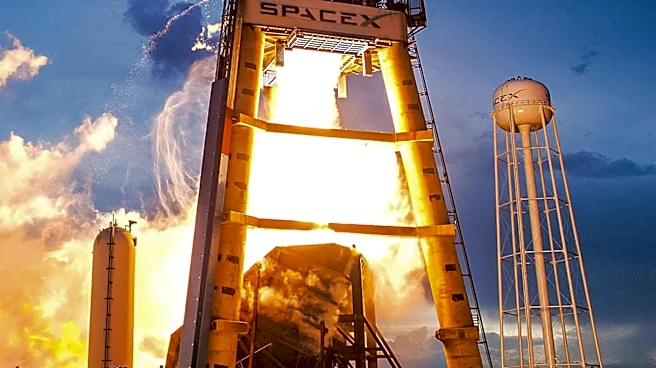
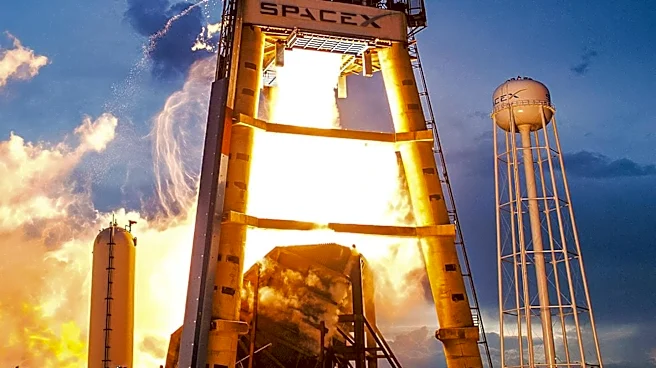
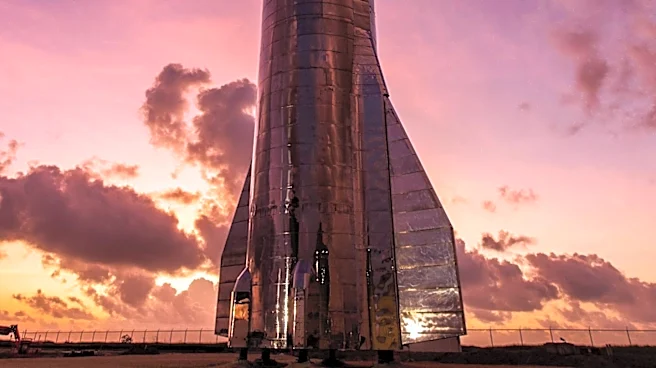
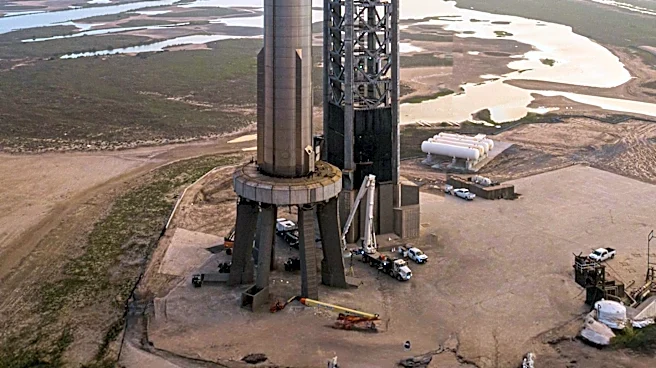
SpaceX has conducted a successful static fire test of its next Starship vehicle, Ship 40, at the Massey test site in Starbase, Texas. This test involved a full-duration burn of one of the central Raptor 3 engines, lasting about 15 seconds. The static fire is a crucial
step to ensure the spacecraft's engines are operational before an actual launch. Ship 40 is set to be part of the upcoming Flight 13 demonstration mission. The Starship V3, which is 408 feet tall, is the most powerful version of the launch vehicle to date, featuring six Raptor 3 engines. The recent test follows the first launch of the 'Version 3' Starship rocket, which occurred about a month ago. Despite some malfunctions during the initial launch, SpaceX deemed it a successful test of the vehicle's new systems.
Why It's Important?
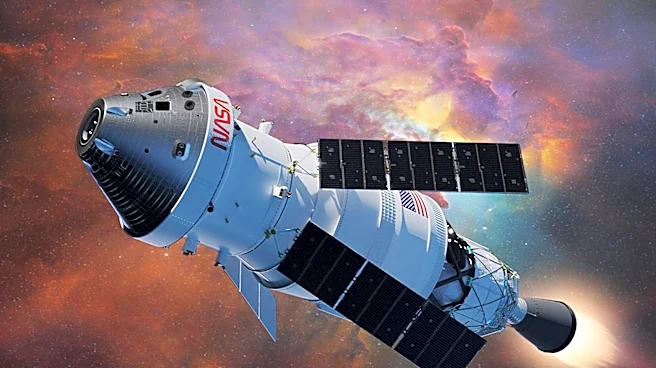
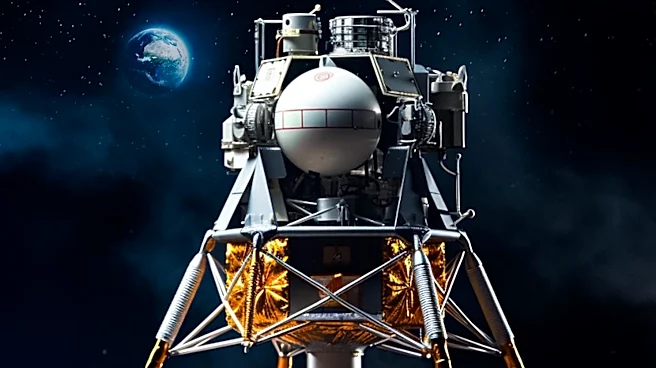
The successful static fire test marks a significant milestone in SpaceX's development of the Starship, a super-heavy lift rocket designed to be fully reusable. This vehicle is central to SpaceX's plans for future space exploration, including missions to the moon and beyond. The Starship's ability to refuel in space is critical for its success in reaching destinations beyond low Earth orbit. SpaceX has been contracted by NASA to use the Starship as a lunar lander for the Artemis program, which aims to return humans to the moon. The success of these tests is crucial for SpaceX to meet its commitments to NASA and to advance its own goals of making space travel more accessible and sustainable.
What's Next?
SpaceX is progressing towards the next full flight campaign for the Starship, which will include engine tests with all six of Ship 40's Raptor engines and all 33 of the Super Heavy booster’s engines. The company has not yet released specific details about the upcoming Flight 13, but it is expected to occur before the end of the summer. Additionally, SpaceX is working towards demonstrating the Starship's refueling capabilities in space, a critical function for its planned missions. The first lunar landing mission under NASA's Artemis program, which will require at least 15 refueling flights, is scheduled for late 2028.