


What's Happening?
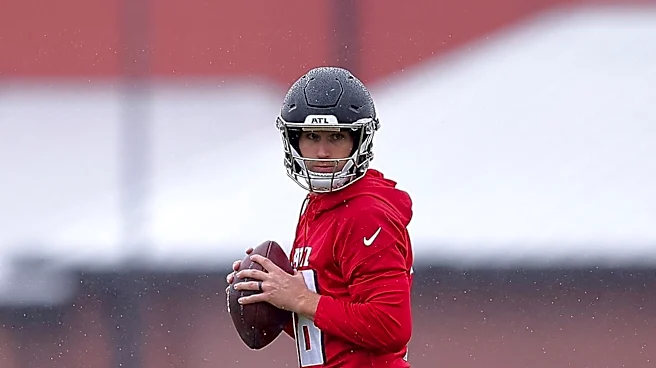
Private equity firm Arctos has agreed to purchase a 10% ownership stake in the Atlanta Falcons from team owner Arthur Blank. The deal values the NFL franchise at $10.6 billion. According to reports, Arctos will pay for the 10% ownership in two installments
over the next 18 months. Arthur Blank currently holds just under 73% of the Falcons. It remains unclear whether the 10% being sold is solely from Blank's stake or includes limited partners. This transaction highlights the increasing interest of private equity firms in professional sports franchises.
Why It's Important?
This acquisition is significant as it reflects the growing trend of private equity investment in major U.S. sports leagues, particularly the NFL. The $10.6 billion valuation for the Atlanta Falcons underscores the immense financial value and growth potential seen in professional sports teams. For team owners like Arthur Blank, selling a minority stake to a private equity firm provides substantial capital without relinquishing full control, which can be reinvested into the team, stadium infrastructure, or other ventures. For Arctos, this investment offers a stake in a high-value asset with potential for long-term appreciation and diversified returns. This trend could lead to increased financial liquidity for sports franchises, potentially impacting player salaries, team facilities, and overall league operations. It also signals a shift in ownership structures, moving beyond traditional individual or family ownership to include institutional investors.
What's Next?
The transaction will proceed with Arctos making two installment payments for the 10% stake in the Atlanta Falcons over the next 18 months. The influx of capital from this sale could be utilized by Arthur Blank for various purposes, including further investments in the Falcons organization or other business interests. This deal may also encourage other NFL team owners to explore similar private equity partnerships, further integrating institutional investment into the league. The NFL and other major sports leagues will likely continue to monitor and potentially adapt their ownership rules to accommodate the increasing involvement of private equity firms, balancing the need for capital with maintaining the integrity and traditional ownership models of their franchises.
Beyond the Headlines
The entry of private equity firms like Arctos into professional sports ownership has broader implications for the U.S. sports landscape. It signifies a recognition of sports franchises as stable, high-growth assets, attracting sophisticated financial investors. This trend could lead to a more business-oriented approach to team management, potentially prioritizing financial returns and global brand expansion. There are also ethical and cultural dimensions to consider: how will institutional ownership affect team identity, fan engagement, and community ties? While private equity can bring financial stability and strategic expertise, concerns might arise about the potential for short-term profit motives to overshadow long-term team development or fan interests. This shift could fundamentally alter the traditional relationship between sports teams, their owners, and their fan bases, moving towards a more corporatized model.