









What's Happening?
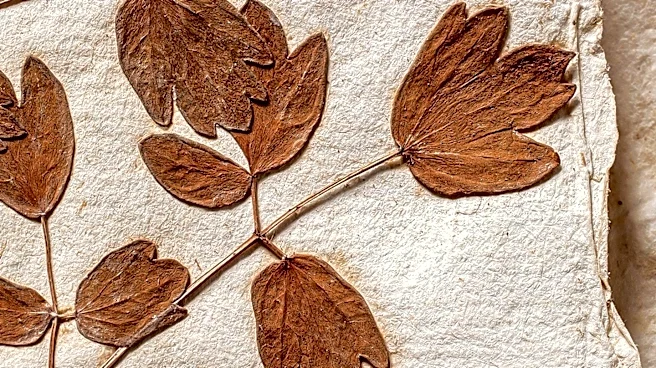
Malin Fabbri, a prominent figure in alternative photography, has released a new book titled 'Anthotypes – The Complete Guide to Making Photographs with Plants and Sunlight.' This publication serves as a detailed manual for creating photographs using the
anthotype process, which involves using plant-based emulsions and sunlight. The book provides a step-by-step guide on selecting and preparing plants, creating emulsions from plant pigments, and printing vibrant images using sunlight. It also includes methods for toning prints and insights into the permanence of these images. Fabbri's work connects 19th-century photographic techniques with modern eco-friendly practices, offering both beginners and experienced artists a comprehensive resource. The book is available in paperback and coilbound formats, making it practical for use in creative settings.
Why It's Important?
The release of this book is significant as it promotes sustainable and eco-friendly practices in the field of photography. By using natural materials and sunlight, the anthotype process reduces reliance on chemical-based photographic methods, aligning with growing environmental consciousness. This approach not only offers a creative outlet but also encourages artists to engage with nature in their work. Fabbri's book could inspire a shift towards more sustainable artistic practices, potentially influencing educational curriculums and workshops focused on photography. As environmental concerns continue to rise, such eco-friendly methods may gain popularity, impacting how photography is taught and practiced.
What's Next?
Following the release of 'Anthotypes,' there may be increased interest in workshops and courses focused on alternative photographic processes. Educational institutions and art communities might incorporate these techniques into their programs, fostering a new generation of environmentally conscious photographers. Additionally, the book could lead to collaborations between artists and environmental organizations, promoting awareness and innovation in sustainable art practices. As more artists explore these methods, there could be a rise in exhibitions and publications showcasing works created through eco-friendly processes.
Beyond the Headlines
The anthotype process, as detailed in Fabbri's book, not only offers an environmentally friendly alternative to traditional photography but also challenges artists to rethink their relationship with nature. This method encourages a deeper understanding of natural materials and their potential in art, fostering a connection between creativity and environmental stewardship. As artists experiment with plant-based photography, there may be broader discussions on the role of art in addressing ecological issues, potentially influencing cultural perceptions and policies related to sustainability.