






What's Happening?
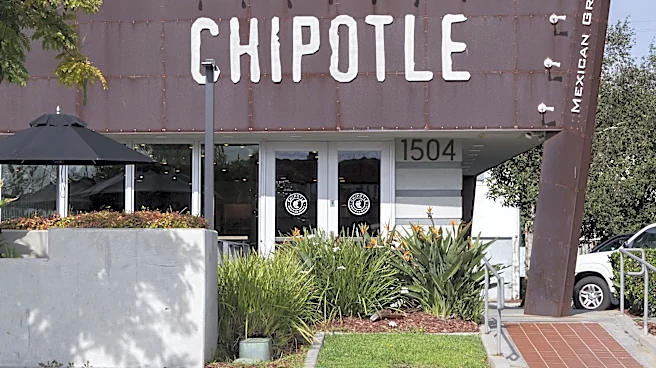
Chipotle Mexican Grill, Inc. (CMG) continues to exhibit steady revenue growth, contrasting with the rapid expansion seen in newer restaurant chains like CAVA. While CAVA's revenue growth is primarily driven by aggressive store count increases, Chipotle,
with over 4,000 locations, relies on a combination of new store openings and revenue growth from existing establishments. In the third quarter of 2026, Chipotle generated over nine times CAVA's quarterly sales volume, showcasing greater seasonal stability. The company's digital mix accounted for 38.8% of its Q3 food sales, contributing to sustained high-single-digit top-line growth and substantial cash flow. Chipotle has consistently outearned CAVA in every quarter since late 2024, demonstrating its resilience and established market presence. The company recently opened its first restaurant in Seoul, South Korea, and appointed Sabir Sami to its Board of Directors.
Why It's Important?
Chipotle's sustained revenue growth and operational stability are significant indicators for the U.S. restaurant industry and investors. Its ability to maintain growth through both new store expansion and existing store performance highlights a mature and resilient business model. This contrasts with the high-growth, high-valuation strategies of newer chains, which are more susceptible to market fluctuations if their rapid expansion slows. Chipotle's strong digital sales component also underscores the increasing importance of technology in the fast-casual dining sector, influencing how other companies might invest in their digital infrastructure. For consumers, Chipotle's continued expansion and focus on 'responsibly sourced, classically cooked, real food' reinforces a trend towards healthier and more transparent food options, potentially driving competitors to adapt their offerings.
What's Next?
Chipotle is expected to continue its strategic expansion, both domestically and internationally, as evidenced by its recent opening in South Korea. The company will likely further leverage its digital platforms to maintain and grow its high digital sales mix, which is crucial for sustained revenue growth and customer engagement. Investors will be closely watching Chipotle's comparable sales growth in existing stores, as this metric is key for a mature company with a large footprint. The company's commitment to 'shaping the future of farming and food' suggests potential future initiatives in sustainable sourcing and supply chain innovation. Furthermore, Chipotle's ongoing employee training and career development programs indicate a continued focus on human capital, which could influence labor practices across the industry.
Beyond the Headlines
Chipotle's business model extends beyond just serving food; it represents a significant player in the broader conversation about sustainable business practices and food accessibility. Its emphasis on 'responsibly sourced' ingredients and avoidance of artificial additives sets a benchmark for ethical sourcing and transparency in the fast-casual sector. This commitment can influence consumer expectations and pressure other food service companies to adopt similar standards, potentially leading to a broader shift in the food supply chain. The company's scale and resilience, even during periods of tightened consumer spending, highlight the value of a strong brand and operational efficiency in a competitive market. Chipotle's success also reflects a cultural shift towards valuing food quality and ethical production, impacting dietary trends and consumer choices across the U.S.