





What's Happening?
Gold prices increased on Tuesday after initially hitting a two-week low earlier in the session. This rise occurred as markets anticipated key U.S. inflation data, with tensions between the U.S. and Iran causing oil prices to climb and reinforcing expectations
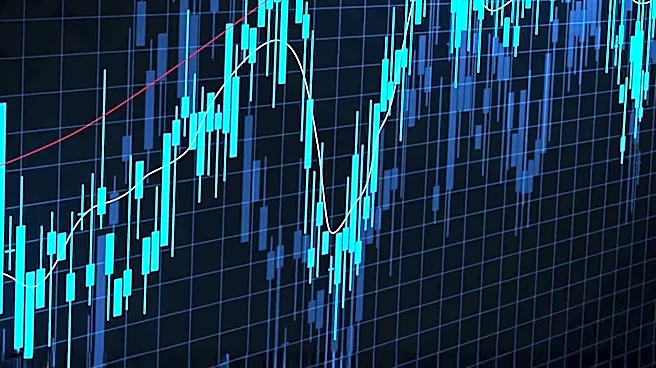
of further Federal Reserve rate hikes. Spot gold rose by 1.2% to $4,046.64 an ounce, recovering from its lowest level since July 1. U.S. gold futures also saw a gain of 1.6%, settling at $4,069.70. The U.S. dollar fell by 0.3%, making gold more affordable for holders of other currencies. The increase in gold prices was driven by softer-than-expected inflation data, with the U.S. consumer price index (CPI) increasing by 3.5% in the 12 months through June, down from 4.2% in May. Core CPI inflation remained unchanged month-over-month, after a 0.2% increase in May.
Why It's Important?
The rise in gold prices is significant as it reflects market reactions to U.S. inflation data and geopolitical tensions. Gold is often seen as a hedge against inflation, and its price movements can indicate investor sentiment regarding economic stability. The softer-than-expected inflation data suggests that the Federal Reserve may not need to raise interest rates as aggressively as previously anticipated, which could impact financial markets and economic policy. The decrease in rate hike expectations for the upcoming Federal Reserve meetings could lead to shifts in investment strategies and economic forecasts. Additionally, the ongoing U.S.-Iran tensions and their effect on oil prices highlight the interconnectedness of global geopolitical events and economic indicators.
What's Next?
Investors and market analysts will closely monitor upcoming economic data releases and Federal Reserve communications for further insights into inflation trends and monetary policy decisions. The Federal Reserve's next meetings in July and September will be pivotal in determining the future path of interest rates. Any changes in geopolitical dynamics, particularly involving the U.S. and Iran, could also influence market conditions and investor behavior. Traders will continue to adjust their positions based on evolving economic indicators and geopolitical developments.