






What's Happening?
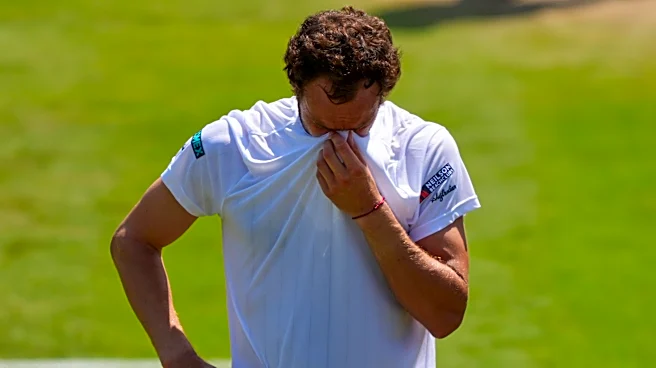
Matteo Berrettini, a former Wimbledon runner-up, faced a setback when his outfit was banned by Wimbledon officials for not adhering to the tournament's strict all-white dress code. Sponsored by fashion brand Hugo Boss, Berrettini had planned to wear a beige
jacket, which he showcased on Instagram. However, the All England Club deemed the outfit not white enough, preventing him from wearing it during his match against Arthur Fils. Despite this, Berrettini secured a victory in the second round, marking his first Centre Court win since 2021. The dress code at Wimbledon requires players to wear attire that is almost entirely white from the moment they enter the court surround.
Why It's Important?
The enforcement of Wimbledon's dress code highlights the tournament's commitment to tradition, which can impact players' sponsorship and branding opportunities. For athletes like Berrettini, who are associated with fashion brands, such restrictions can limit their ability to showcase sponsored apparel, potentially affecting their marketability and financial agreements. This incident underscores the tension between maintaining traditional sports regulations and accommodating modern branding strategies. It also reflects the broader challenges athletes face in balancing personal expression with institutional rules.
What's Next?
As Wimbledon continues to enforce its dress code, players and sponsors may need to adapt their strategies to comply with these regulations while still achieving their branding goals. This could involve designing attire that meets the tournament's requirements without compromising on style or brand visibility. Additionally, the incident may prompt discussions within the tennis community about the relevance and flexibility of traditional dress codes in modern sports. Players and sponsors might advocate for more lenient rules that allow for greater personal and brand expression.