




What's Happening?
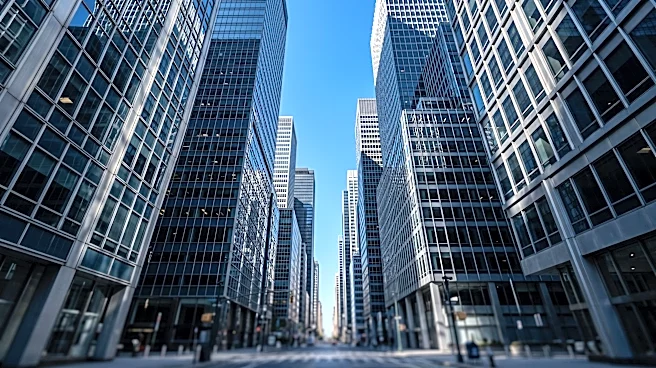
Chicago's Central Business District is experiencing a significant office vacancy crisis, with the direct vacancy rate surpassing 21% by the first quarter of 2024. Class B buildings face a 25.7% vacancy rate, and Class C properties are at 23.9%. This elevated
vacancy, largely attributed to the COVID-19 pandemic's lasting impact on office space needs, is prompting a wave of office-to-residential conversions. The city's 'LaSalle Street Reimagined' initiative is actively facilitating these transformations. Recently, the 121-year-old Rector Building, now known as the Bellwether, was converted into 117 apartments, marking the first completed project under this initiative in the Loop. This conversion utilized a financial package including $28 million in city tax increment financing and $7.8 million in federal tax credits due to its historic landmark status. Of these units, 41 are designated for households earning approximately 60% of the area median income. Chicago anticipates 806 new apartments through adaptive reuse this year, with an additional 3,921 units in the pipeline.
Why It's Important?
The high office vacancy rate in downtown Chicago has profound implications for the city's urban landscape and economy. The conversion of vacant office towers into residential units addresses two critical issues: the underutilization of commercial real estate and the pressing demand for housing, particularly affordable housing. The 'LaSalle Street Reimagined' initiative, backed by $320 million in tax increment financing over two years, demonstrates a significant public-private commitment to revitalizing the downtown area. This strategy not only repurposes dormant spaces but also aims to create mixed-income communities, fostering greater urban density and vibrancy. The success of these conversions could serve as a model for other U.S. cities grappling with similar office vacancy challenges, potentially transforming urban cores nationwide. Furthermore, the emphasis on affordable housing within these projects helps mitigate housing affordability crises, providing much-needed relief to lower-income households and promoting social equity.
What's Next?
Chicago's office-to-residential conversion trend is set to deepen considerably in the coming years. The LaSalle Street initiative currently has six active projects, aiming to repurpose over 2 million square feet of office space into 1,765 mixed-income residential units. Notable projects include the conversion of the Field Building at 135 S. LaSalle St. into 386 residential units, with a budget of approximately $242 million, supported by $98 million in TIF subsidies. River North is also emerging as a key area for these conversions, with projects like the loft office building at 223 W. Erie St. being transformed into 66 apartments, targeting spring 2027 occupancy. The city's commitment to financial partnerships, including tax-exempt housing revenue bonds and historic preservation tax credits, will continue to drive these developments. Stakeholders will need to navigate challenges such as the high cost of renovating older buildings, zoning variances, and compliance with affordable housing ordinances, which mandate that 30% of newly created units in the LaSalle Street corridor be affordable.
Beyond the Headlines
Beyond the immediate economic and housing benefits, Chicago's adaptive reuse strategy signals a long-term shift in urban planning and development. The conversion of office buildings into residential spaces reflects a broader re-evaluation of how urban centers function in a post-pandemic world, moving away from solely commercial hubs to more integrated live-work-play environments. This trend also carries significant environmental implications; repurposing existing structures preserves embodied energy and reduces the carbon footprint associated with new construction, aligning with sustainability goals. Ethically, the focus on creating mixed-income housing within these conversions addresses issues of urban inequality and gentrification, striving for more inclusive city development. The challenges, such as the extensive costs of updating old infrastructure and navigating complex regulatory frameworks, highlight the need for innovative financing and flexible policy approaches to sustain this transformative urban renewal. This movement could redefine the character of downtown Chicago, fostering a more resilient and diverse urban ecosystem.