








What's Happening?
JBS, the world's largest meat processor, has officially abandoned its commitment to achieving net-zero greenhouse gas emissions by 2040. This decision was revealed in the company's latest Non-Financial Disclosure Report for 2025, which omits any mention
of Scope 3 emissions targets. Scope 3 emissions, which account for approximately 97% of JBS's total emissions, are primarily associated with the rearing of cattle, a significant source of methane. The company had initially announced its net-zero pledge in 2021, aiming for a 30% reduction in Scope 1 and 2 emissions by 2030. However, JBS has now removed the net-zero target from its website, citing challenges in measuring and reducing Scope 3 emissions. The company's global chief sustainability officer, Jason Weller, stated that the net-zero goal was more of an 'aspiration' rather than a firm promise.
Why It's Important?
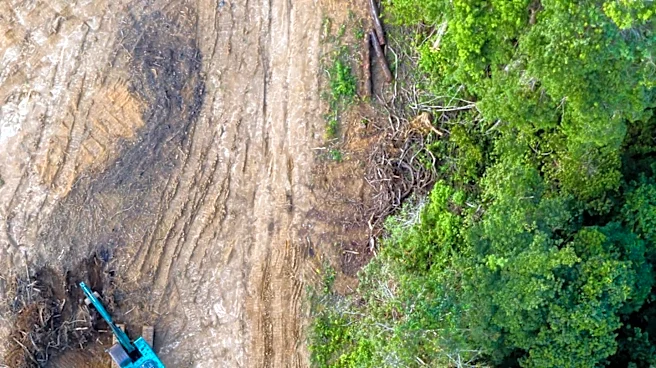
The abandonment of the net-zero target by JBS has significant implications for global climate efforts, particularly given the company's substantial contribution to greenhouse gas emissions. As a major player in the meat industry, JBS's decision to exclude Scope 3 emissions from its targets creates a substantial gap in addressing climate change. This move has drawn criticism from environmental groups, such as Mighty Earth, which accuse JBS of failing to take responsibility for its environmental impact, including deforestation and pollution. The decision could undermine efforts to hold large corporations accountable for their role in climate change and may influence other companies in the industry to deprioritize their climate commitments.
What's Next?
JBS's decision to drop its net-zero target is likely to attract increased scrutiny from environmental advocacy groups, investors, and regulators. The company may face pressure to reinstate its climate commitments or to develop alternative strategies to address its environmental impact. Additionally, this development could prompt discussions within the meat industry and among policymakers about the need for stricter regulations and more transparent reporting on emissions. Stakeholders may also explore ways to incentivize or mandate reductions in Scope 3 emissions, which are critical to achieving broader climate goals.
Beyond the Headlines
The decision by JBS to abandon its net-zero target highlights the broader challenges faced by the agricultural sector in addressing climate change. The reliance on livestock, particularly cattle, poses significant environmental challenges due to methane emissions. This situation underscores the need for innovation in sustainable farming practices and the development of alternative protein sources. Furthermore, the move raises ethical questions about corporate responsibility and transparency in environmental reporting, as well as the role of consumer demand in driving corporate sustainability efforts.