






What's Happening?
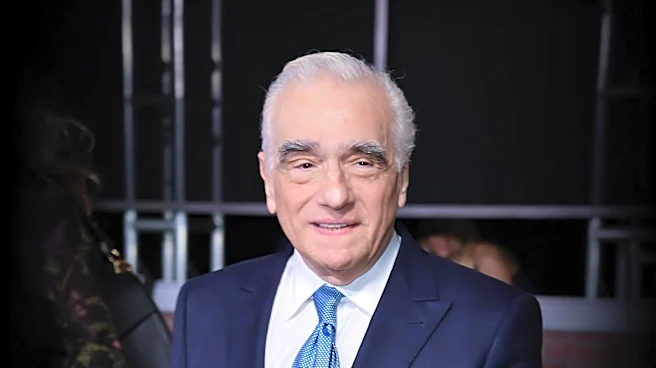
Actor P.J. Byrne, known for his roles in films like 'The Wolf of Wall Street' and 'Babylon,' recently discussed his experiences working with acclaimed director Martin Scorsese. Byrne highlighted Scorsese's collaborative approach, particularly noting how
Scorsese fosters an environment where actors feel free to improvise and contribute creatively. Byrne recounted his audition for 'The Wolf of Wall Street,' where his unique, self-written monologue impressed Scorsese, who later recited parts of it back to him. This experience, along with subsequent collaborations on projects like the series 'Vinyl,' illustrates Scorsese's trust in his actors' instincts and his encouragement for them to 'mess it up' rather than stick rigidly to the script. Byrne also shared an anecdote from Scorsese regarding producer Irwin Winkler, where Scorsese praised Winkler for shielding him from behind-the-scenes chaos, allowing him to focus solely on the creative process. This insight provides a glimpse into the working dynamics that contribute to Scorsese's distinctive filmmaking style.
Why It's Important?
This insight into Martin Scorsese's directorial methods is significant for understanding the creative processes behind some of the most influential films in American cinema. Scorsese's willingness to empower actors and embrace improvisation can lead to more authentic and dynamic performances, which in turn shapes the narrative and emotional impact of his movies. For aspiring filmmakers and actors, Byrne's account offers valuable lessons on collaboration, trust, and the importance of creative freedom on set. Furthermore, the anecdote about Irwin Winkler underscores the crucial role producers play in facilitating artistic vision by managing logistical and financial pressures. This behind-the-scenes perspective helps demystify the filmmaking process, revealing how a director's leadership style can profoundly influence the final product and contribute to a film's critical and commercial success. It also reinforces Scorsese's reputation as a director who values artistic integrity and performance above strict adherence to pre-planned execution.
What's Next?
While the article primarily reflects on past collaborations, the ongoing discussion of Martin Scorsese's methods by actors like P.J. Byrne continues to shape public perception and academic understanding of his work. Future projects involving Scorsese are likely to be viewed through the lens of these insights, with audiences and critics anticipating the unique blend of directorial vision and actor improvisation that has become a hallmark of his films. For actors who have worked with Scorsese, sharing these experiences can influence their own approaches to filmmaking and collaboration. The continued appreciation for Scorsese's style may also encourage other directors to adopt more collaborative and actor-centric methods, potentially fostering a broader shift in industry practices towards greater creative freedom on set. As Scorsese continues his prolific career, these discussions serve to reinforce his legacy and influence on contemporary cinema.
Beyond the Headlines
Beyond the immediate details of Scorsese's working style, Byrne's reflections touch upon deeper themes within the film industry, such as the balance between artistic vision and commercial pressures. Scorsese's ability to maintain creative control, often facilitated by producers like Irwin Winkler, highlights the ongoing tension between art and commerce in Hollywood. The emphasis on improvisation also speaks to the evolving nature of performance and storytelling in film, where authenticity and spontaneity are increasingly valued. Ethically, Scorsese's approach suggests a model of leadership that prioritizes the well-being and creative input of his team, fostering an environment where talent can flourish. This collaborative ethos stands in contrast to more hierarchical or rigid directorial styles, offering a compelling case study in effective artistic leadership. Ultimately, these insights contribute to a broader understanding of the cultural and artistic impact of filmmaking, showcasing how individual directorial philosophies can shape not only specific films but also the industry at large.