






What's Happening?
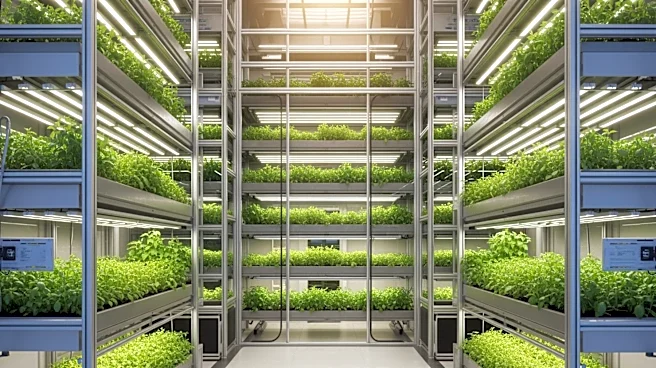
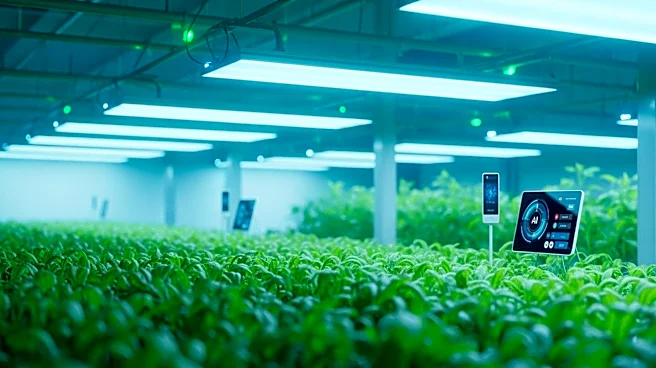
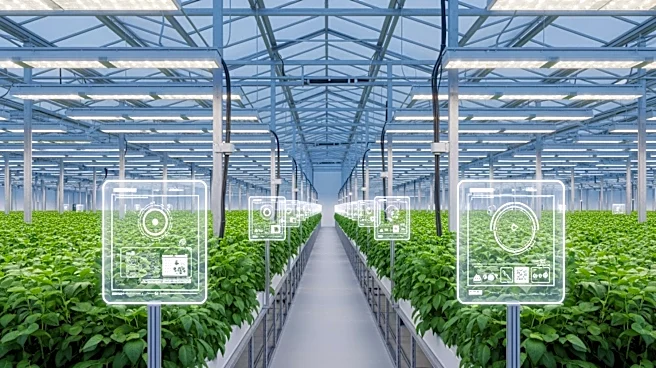
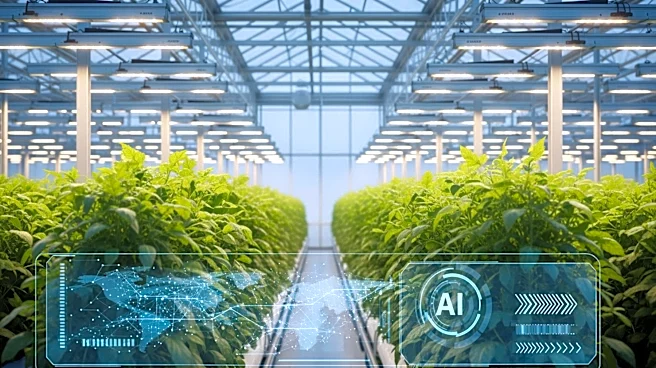
Researchers at Kentucky State University have highlighted the growing importance of artificial intelligence in controlled environment agriculture. A recent review in the Journal of the American Society for Horticultural Science discusses how AI technologies
are improving productivity and decision-making in systems like greenhouses and vertical farms. AI tools analyze data from sensors and automation systems to enhance management practices and address production challenges. The study emphasizes AI's role in improving disease detection, irrigation scheduling, and crop forecasting, while noting the need for robust data systems and producer education.
Why It's Important?
The integration of AI in agriculture represents a significant advancement in optimizing resource use and increasing crop yields. By enabling precise monitoring and management, AI can help farmers detect issues early and make informed decisions, ultimately leading to more sustainable and efficient food production. This technological shift is crucial as the agriculture industry faces challenges such as climate change, resource scarcity, and the need for increased food production to meet global demand. The adoption of AI can also reduce labor costs and improve the overall resilience of agricultural systems.
What's Next?
The future of AI in agriculture will depend on the development of stronger data systems and clear guidelines for agricultural data use. As AI technologies become more accessible, there will be a need for comprehensive training programs to educate producers on their implementation and benefits. Policymakers and industry leaders may also need to address privacy concerns and establish standards to ensure the ethical use of AI in agriculture. Continued research and collaboration between academic institutions and industry stakeholders will be essential to drive innovation and adoption in this field.